Oct. 8, 2025

Move Back To Your College Town

When Gary Graves began considering the best place to enjoy his retirement, it was an easy choice: He headed back to the town where he went to college.

Born in New Jersey and reared in Ohio, Graves, now 65, had lived for years in Naperville, Illinois, a distant suburb southwest of Chicago, pursuing his long career as a corporate executive, turnaround expert, advisor and entrepreneur. But as he started scaling back his work hours and had more free time, he decided he wanted a retirement spot more attuned to his passions, which include golf and the arts—and boosting college sports.

So in 2021 Graves and his wife, Heather, who still works full-time as a nonprofit fundraiser, moved 260-miles east to Ann Arbor, the home of the University of Michigan and a growing retirement mecca.

He knew Ann Arbor well, having graduated from Michigan in the 1980s with a degree in chemical engineering. Plus, two of his grown sons live in the area, along with three grandchildren and another on the way. Gary lauds the “phenomenal” medical community and the intellectual milieu.

“I love this town,” he declares. “We didn’t consider other places.” Downsizing? Nope. They ended up buying a bigger house, a four-bedroom, six-bath spread on a pond off a golf course in Saline, near the Ann Arbor city limits.

Around Ann Arbor, a city of 116,000, 30 miles west of Detroit, culture has a broad definition that includes sports, notably the big-time athletic program at Michigan. Gary bleeds Michigan’s colors, maize and blue. “I’m just five miles from Michigan Stadium,” he says.

Ann Arbor is one of 25 places on the Forbes list of 25 Best Places to Enjoy Your Retirement In 2025. The roster identifies terrific spots to follow a half-dozen retirement passions: arts/culture, fine dining, lifelong learning, outdoor activities on water, outdoor activities on land, and a special category just for golf. Besides arts/culture, golf and fine dining, Ann Arbor is, not surprisingly, great for lifelong learning. The current catalogue for the Osher Lifelong Learning Institute at the university is more than 100 pages long, with classes on everything from nuclear physics to “Vienna from the Habsburgs to Hitler.”

College towns tend to punch above their population weight when it comes to arts/culture, learning opportunities and even fine dining, which explains why about a third of our 25 picks could be considered college towns.

Most of the four million or so Americans retiring each year don’t move or move very far, unless they’re looking to be near family, cut costs—or pursue a dream. (The main Forbes list of Best Places To Retire in 2025 stresses affordability, while our Best Places to Retire Abroad list is for both dreamers and penny pinchers.) But particularly in the aftermath of the pandemic and increasing work-from-home flexibility, Baby Boomers and Gen Xers contemplating retirement are seeing a move as a chance to indulge in long-held passions, now that they’ve got more time. We evaluated places for six areas of interest: arts/culture, fine dining, lifelong learning, outdoor activities on water; outdoor activities on land, and in its own special category, golf. The full list can be found here [insert link]. Our choices are listed alphabetically, with the particular passions noted for each place.

Here’s how this list was put together. We looked at nearly 1,000 places around the country (including some suggested by Forbes readers), amassing a ton of data we put through our evaluative metrics. We eliminated places with populations below 10,000 on the theory there would be an inadequate supply of housing if everyone rushed in. Focusing on specific passions and top places for them, we reviewed scores of published evaluations by experts and enthusiasts.

We also took into account other quality-of-retirement-life issues. Among them: medical availability, air quality, serious crime rates (axing places more than several times the national average). We noted how walkable and bikeable a place is. Then we applied our editorial judgment.

Ann Arbor is hardly cheap, with a median home price of $516,000, 24% above the national median of $423,000. But on quality-of-life issues, the area really shines. Washtenaw County, where Ann Arbor is located, has more than twice as many primary care doctors per capita as the national average. Serious crime is below the national average. Air quality is good. The city is very bikeable and walkable. FEMA gives Washtenaw County a good rating on its National Risk Index evaluation for vulnerability to natural hazard and climate change dangers. (We cut places in the highest risk category.)

While not the basis for choices, we do take note of state taxes, because they vary widely, and like other living costs can be a major factor for some retirees’ decisions. Four places on the list have no general state income tax: Austin and Dallas in Texas, Sarasota, Florida, and Walla Walla, Washington (although Washington State now levies a 7% “excise tax” on certain high-end asset sales). Three of our picks, all in Oregon, have no sales tax: Ashland, Bend and Eugene. No place on this year’s list taxes Social Security earnings at the state level. But some do tax portions of other retirement or pension income while levying duties on estates and inheritances. There is more detail in our individual write-ups. On the tax front, Ann Arbor does all right. Michigan has a flat-rate state income tax of 4.25% no matter how high the income, which exempts Social Security and some pension income. There’s also no state estate or inheritance tax.

Our underlying data comes from sources that you can check yourself (and consult to evaluate any potential retirement location). Median home prices come primarily from the National Association of Realtors and zillow.com. Cost of living information is drawn from the U.S. Bureau of Labor Statistics and bestplaces.net. Serious crime stats are collected by the Federal Bureau of Investigation, neighborhoodscout.com, and, on occasion, official local tabulations. The data on primary care doctors come from countyhealthrankings.org. Air quality metrics are collected by the U.S. Environmental Protection Agency. Assessments of walkability (the ability to stroll easily to basic retail businesses and mass transit for everyday needs) and bikeability (same idea using pedaling) come from walkscore.com and the League of American Bicyclists. The Federal Emergency Management Agency maintains the National Risk Index for natural hazard dangers; we use the county-wide dataset.

Read more at Forbes.

Posted in General
Oct. 6, 2025

What is the Government Shut Down Doing to the Mortgage Market?

Shutdown of the Government

The government shutdown resulted in the non-release of several critical reports, which left investors largely in the dark, as opposed to the customary first week of the month, which is typically characterized by the release of significant economic data. There was minimal response to the most recent economic data that private companies had collected. As a consequence, mortgage rates concluded the week at a minor decline, approaching their lowest point of the year.


Government shutdowns have historically had minimal long-term consequences for mortgage markets. That being said, the consequences of the closure will be more severe as it continues. The most apparent issue in the immediate future is the delay in the publication of economic reports from government agencies, which include critical inflation and labor market indicators. In addition, the cessation of government data collection may raise some concerns among economists regarding the precision of the October reports, should they be released. It is also important to mention that private companies are the source of a reasonable quantity of labor market data; however, they are unable to provide much information about inflation. In the long term, investors will be primarily interested in determining whether there is a permanent decrease in government employment, which could result in a decrease in consumer expenditure and a slower pace of economic growth.

The Institute of Supply Management issued two substantial economic reports this week, which yielded inconsistent outcomes. The national manufacturing index increased to 49.1, while the ISM national services sector index unexpectedly decreased to 50.0, the lowest level since May. Sector expansion is indicated by readings exceeding 50, while contraction is indicated by readings below 50. Service companies are still outperforming, but manufacturing companies may experience an increase in revenue as a result of increased tariffs on foreign products.

The Conference Board's most recent report on consumer confidence indicates that consumers continue to harbor reservations regarding the consequences of tariff increases and the government closure. In June, the index experienced a significant decline, settling at 94.2, which is significantly lower than the consensus forecast of 96.0 and the lowest level since April. The decline was observed in virtually all income and age groups. Specifically, the labor market's prospects were diminished. The percentage of consumers who perceive job availability as abundant decreased for the ninth consecutive month, reaching its lowest point since February 2021.

The Week Ahead

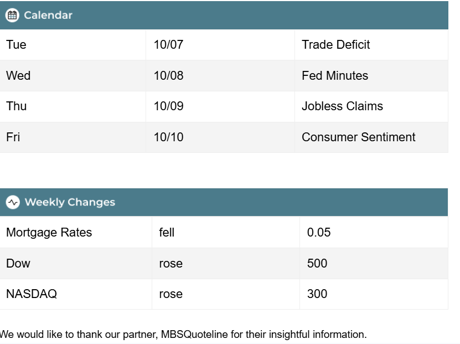
In the future, investors will continue to monitor comments from Fed officials for hints about monetary policy later in the year and wait for additional information about tariffs. It was anticipated that the week would be exceedingly sparse in terms of economic reports. There is a possibility that no substantial economic data will be released next week due to the government closure. The Trade Deficit is scheduled to be released on Tuesday.

Posted in Market Updates
Oct. 3, 2025

Top Ten Things to Do in Cincinnati This Weekend October 3-5

The first weekend of October is pure magic in Cincinnati! The city swaps the last of the summer heat for a refreshing blend of high-culture performances, unique festivals, and seasonal thrills. Forget the everyday: October 3-5, 2025, is packed with special events you'll want to be part of. Here is your curated list of the top ten things to do in the Queen City this weekend.

1. Step into a Spooky Wonderland at Jack O'Lantern Glow: The Cincinnati Zoo & Botanical Garden transforms into a stunning, non-scary spectacle for all ages. This special ticketed event features thousands of illuminated, hand-carved pumpkins and breathtaking fall displays along a half-mile trail. It opens for the season this weekend (Oct 3-5).

2. Immerse Yourself in Classical Grandeur with the CSO: The Cincinnati Symphony Orchestra presents "GERSHWIN & STRAUSS: Cristian Măcelaru's Debut" on Friday and Saturday (Oct 3-4) at Music Hall. Join the CSO for a performance featuring acclaimed pianist Hélène Grimaud and a post-concert celebration on opening night.

3. Get Your German On at Donauschwaben Oktoberfest: If you missed Oktoberfest Zinzinnati, you're in luck! The Cincinnati Donauschwaben's Oktoberfest runs from October 3-5 and is the only major Oktoberfest in Greater Cincinnati held in October. It features authentic imported German beers, pit-roasted pig, and homemade German food.

4. See a Broadway Musical for Kids: "Dog Man: The Musical": Bring the whole family to the Aronoff Center on Saturday and Sunday (Oct 4-5) for "Dog Man: The Musical." Based on the worldwide bestselling hit series by Dav Pilkey, this is a fun, energetic show perfect for children.

5. Rock Out with Judas Priest & Alice Cooper: Two legends of rock and metal take the stage at Riverbend Music Center on Saturday, October 4th. Catch Judas Priest & Alice Cooper Live, an unforgettable night of music with special guest Corrosion of Conformity.

6. Be Charmed by a Fall Festival in Wyoming: On Saturday, October 4th, the city of Wyoming hosts its 42nd Annual Fall Festival. This long-running community event is a perfect way to experience a local, family-friendly celebration with a classic small-town feel.

7. Experience High Art at the Hyde Park Square Art Show: On Sunday, October 5th, the annual Hyde Park Square Art Show brings together 2,000 artists and art lovers for a major community showcase. It's a wonderful opportunity to browse and purchase unique works from local and regional talent.

8. Dance the Night Away with Christian Music Icons: Head to Truist Arena on Friday, October 3rd, to see an unforgettable concert featuring TobyMac & MercyMe, joined by Matthew West. This high-energy tour promises a collection of iconic Christian music hits.

9. Honor a Legacy at Music Hall: On Sunday, October 5th, the CSO is hosting "A Community Celebration of Life: Honoring Norman E. Johns." This free, public event celebrates the life of the Orchestra's former Assistant Principal Cellist and longest-serving African American musician.

10. Attend a Neighborhood Block Party or Fundraiser: Check out one of the smaller, local gatherings, like the "Our Block Party" or the formal "Hats Off Luncheon" on Friday, October 3rd, or the "Westwood Art Show & Wine Festival" on Saturday, October 4th. These are great opportunities to connect with the local community and support neighborhood initiatives.


Posted in General
Oct. 1, 2025

Is ‘Home Hardening’ Worth It? 5 Weatherproofing Projects That Pay Off

Severe weather can cause thousands of dollars' worth of damage to your house. For this reason, house hardening is a rapidly expanding trend among homeowners who want to safeguard both their homes and their finances.
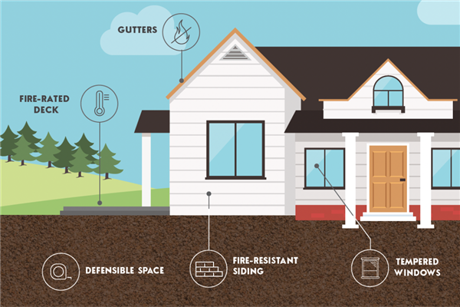
Making improvements to your home that especially guard against weather and climatic calamities is known as "home hardening." When you decide to sell, certain initiatives don't provide a return on your investment, and not all of them are essential. However, the right upgrades are valued by potential buyers. For advice on the improvements with the biggest impact and highest return on investment, we consulted professionals in the field of climate readiness.

The Benefits of Renovations to Harden Your Home
According to Peter Piotrowski, chief claims officer of Hippo Insurance, "the best weather-resistant home hardening upgrades depend on several factors, including the materials used in your home, its location, and local weather risks."

Piotrowski continues, "According to Hippo's Extreme Weather Survey1, a significant majority of homeowners (88%) stated that they would be willing to pay more for a home with climate-resilient features, with one in five stating that they would be willing to pay up to $10,000 more for a home built to withstand extreme weather."

According to Lauren Dowling, a senior vice president at World Insurance, "properties with impact windows, fire-resistant materials, backup power, and flood mitigation features are already seeing increased interest from real estate professionals in high-risk areas." These properties typically sell more quickly, stand out in real estate listings, and cause fewer issues when inspected or reviewed by insurance. The need for resilient housing is only anticipated to increase as long as climate events persist.

Selecting Appropriate Home Improvements
Both existing homeowners and prospective homebuyers are growing increasingly interested in strategies to safeguard their properties as more catastrophic weather events occur each year.

According to Piotrowski, "Homeowners' concern for extreme weather preparedness increased year over year, with 25% reporting it as a top issue in 2023 and 28% in 2024," according to our 2025 HousePower Report2. "All of this suggests that homeowners are becoming more interested in climate-conscious design and are becoming more concerned about protecting their home and long-term financial stability."

According to Coldwell Banker Warburg agent Aaron Tetzlaff, he has personally witnessed how these improvements are becoming increasingly significant to insurers, purchasers, and homeowners. Upgrades that are both functional and visible typically yield the highest return from a real estate standpoint, he says.

It shouldn't be a guessing game to protect your house and guarantee a return on your investment. Depending on where you live, certain enhancements indicate a comeback.

Geographical Variability in Home Hardening
"Geography has a significant impact on return on investment. Storm shutters and reinforced garage doors, for instance, are essentially non-negotiable in Florida, according to Tetzlaff. "In the meantime, fire-rated materials, defensible space, and hardened roofs have a direct impact on insurability and resale in California."

The game alters once more as you move eastward. "Upgrades in flood mitigation, such as wet flood-proofing or back-flow preventers, are increasingly expected for us on the East Coast in coastal or low-lying areas," Tetzlaff continues.

Whether your home-hardening methods are important to prospective purchasers depends on where you reside. According to Tetzlaff, "buyers are getting more informed and frequently inquire about these features before even touring a home." The buyers' perception of value has a direct impact on your return on investment.

"You're not only better protected, but you're also helping preserve your home's long-term value when your home is equipped with climate-resilient upgrades that protect it from severe weather in your area," Piotrowski continues. These improvements not only pique the curiosity of potential purchasers, but they also immediately improve your financial situation through government incentives and rebates.

Location-Specific Financial Rewards
"Depending on the location, there are an increasing number of financial incentives," Tetzlaff states. "Always inquire about incentives and rebates with your state, county, and local municipality."

The Federal Emergency Management Agency provides funding to municipalities and people that make specific renovations, in addition to hyperlocal offerings. Certain states provide retrofitting subsidies for wildfire safety, such as California's Wildfire Prepared Home program. Federal tax incentives are also available for Energy Star-certified roofs, windows, and insulation.

According to Tetzlaff, homeowners can frequently recoup 10–30% of project expenses through these initiatives, significantly increasing return on investment.

The Top 5 Home Renovations with the Highest ROI
According to experts, these upgrades yield the highest return on investment when sold.

1. Improvements to Drainage
Enhancing the drainage around your house, whether it be through landscaping or downspouts, is a smart idea for routine home maintenance and an essential update for residents in regions that frequently experience rain and hurricane and other storm threats.

According to Coldwell Banker Warburg broker Suzanne Weinstein, "there are several ways to improve drainage." "First, ensure sure the downspouts transport the water a reasonable distance from the house and maintain gutters in good condition. The second option is to install a French drain on the outside of the house, together with a drain pipe to transport extra water to the street. Third, think about requesting financial assistance from the city or township to install a drain that you may use to link your property's runoff if water collects on the street outside your house during storms.

According to Weinstein, "preventing water from accumulating on your property will do a lot to maintain its condition and value." "These can have a significant impact on hurricanes, tropical storms, and downpours, but they won't do much in catastrophic situations."

Piotrowski advises investigating improvements to your home's structure and systems in addition to landscaping to guard against flood damage. "To avoid expensive damage, it's crucial to make additional improvements like installing sump pumps and caulking foundation cracks," he explains. "One of the most frequent and expensive problems for homeowners is water damage, so it's critical to recognize your risks and take precautions against them."

You can obtain flood insurance more easily when you implement improvements that reduce the risk of flooding. "A lot of homeowners are unaware that a typical homeowners insurance policy does not cover flood damage," Piotrowski explains. "Flood insurance can contribute to extra financial security. Only a small portion of households obtain flood insurance, despite the fact that flooding occurs in 99% of U.S. counties.

2. Doors and Windows That Resist Impact
Installing impact-resistant windows and doors is another crucial improvement for residents in hurricane-prone areas. According to Coldwell Banker Warburg broker Bill Kowalczuk, "they look great, they're new, they add curb appeal, they boost security, and they can lower your insurance."

It has a multifaceted effect on the value of your house. Tetzlaff continues, "They enhance energy efficiency, noise reduction, and aesthetics in addition to providing storm protection."

Kowalczuk advises against installing ornamental storm shutters while you're improving this area. "There's a reason they're called decorative," he explains. "In reality, they don't protect anything."

3. Roofs that are fireproof
Catastrophic wildfires occur annually in states like California. You can install fireproof cladding and roofing to your house to protect it from less severe flames.

According to Harry Statter, a wildfire ecologist and the creator of Frontline Wildfire Defense, "the roof is a critically vulnerable area as it is the largest and most exposed exterior surface on a home." The likelihood of fire is significantly decreased by a Class A Fire-rated roof's resistance to radiant heat and ember ignition. Additionally, a new roof tends to increase a home's market value.

Only if you reside in a region that experiences frequent fire threats is fireproof roofing beneficial for return on investment. According to Tetzlaff, "these upgrades add significant value and are often viewed as essential rather than optional, especially in wildfire-prone areas."

Common options include composite, metal, and clay shingles. Just be careful to use high-quality materials," Kowalczuk continues. He advises avoiding less successful choices like fire-retardant sprays or coatings if you want to safeguard against wildfires using strategies that are both effective and cost-efficient.

"They won't accomplish much on their own," Kowalczuk claims. They are only effective when included in a comprehensive fire safety system. It is essentially pointless to do this alone.

4. Improvements to Smart Homes
Nowadays, almost every significant home system and product has smart home capabilities. These enhancements range from video doorbells to smart thermostats. Investing in smart home systems with features that notify you of significant issues is one specific method of hardening your house.

Automatic water shut-off valves and leak monitoring systems are recommended by Dowling. One of the most common and expensive insurance claims is for water damage. "These systems can stop thousands of dollars in losses by identifying problems early," she says.

According to Dowling, central station fire alarms and monitored smoke detectors can significantly lessen the severity of fire damage since they provide early detection and guarantee a prompt response from first responders.

Surge protection systems, which come in normal and smart home varieties, are perfect for locations where electrical issues are common. These shield expensive gadgets and appliances from harm brought on by lightning strikes or power outages, according to Dowling.

5. Power Plants
Power outages caused by severe storms of various types can be dangerous at worst and expensive at best. Whole-home backup generators keep your gadgets charged and ready while guaranteeing that your food won't go bad and that you may continue using life-saving medical equipment.

"They help maintain climate control, prevent frozen pipes, and keep sump pumps running, which is especially valuable in areas prone to outages," according to Dowling.

If you choose a generator that is not utilized often, you won't get much use out of it, just like other upgrades on this list. Generators are among the resilience items that, according to Tetzlaff, "don't live up to their marketing." He advises against investing in off-grid solutions or oversized generators unless you experience regular and protracted outages.


Posted in General
Sept. 29, 2025

Downsizing Without Debt: How More Homeowners Are Buying Their Next House in Cash

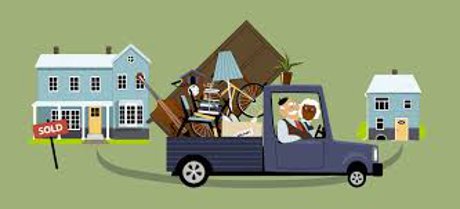
Here's a trend to watch if you've been considering downsizing to save money, live nearer to family, or simply make life easier: Instead of taking out a new mortgage, many homeowners are purchasing their next home outright.
Additionally, you might be able to do the same if you've owned your house for a long time. No mortgage. no housing payments each month.

A Record Number of Homeowners Do Not Have Mortgages
Over 40% of owner-occupied houses in the United States are mortgage-free, which is a record high for this data series, according to ResiClub's analysis of Census data. This indicates that four out of ten homeowners are free and clear homeowners.

Demographics are a major contributing factor to this tendency. Many Baby Boomers have had enough time to pay off their mortgages in full as they get older and remain in their houses longer. It's possible that you belong to that group as well and are unaware of how much money you currently have. That needs to change.

How Equity Is Being Converted into Purchasing Power by Downsizers
Your greatest advantage in the current market as a homeowner is your equity. You may be able to pay cash for your future house if you are mortgage-free or almost so. In retirement, you would still not have to pay your mortgage, in addition to:

Reduced financial strain as you become older

Increased cash flow if you buy a cheaper house

Additionally, the transaction would probably be quicker and easier.

This is how it operates. You would buy your future home with cash after selling your current one. It's more feasible than you might imagine, even though it might seem like something you could never accomplish.

According to agents surveyed by Keeping Current Matters (KCM) and John Burns Research and Consulting (JBREC), the percentage of transactions made by all-cash buyers is increasing nationwide. Additionally, those agents are growing in practically every part of the nation.

Purchasing with cash gives you greater control over your next chapter, especially for Baby Boomers. By purchasing a smaller, less costly home, you can save money, maintain it less, and have more freedom to enjoy the things that really important. all the while avoiding stress and debt.

Because downsizing does not mean lowering the quality of your house. It's about improving your standard of living. And it's worthwhile to investigate it.


Posted in General
Sept. 26, 2025

Top Ten Things to Do in Cincinnati This Weekend September 26-28

It's a fantastic time to be in Cincinnati! The weekend of September 26-28, 2025, is packed with a wide variety of festivals, concerts, and unique events. Forget the standard tourist attractions—this is your guide to the ten best things to do that weekend, focusing on what's new and exciting in the Queen City.

1. Go for Gold at the Kroger Wellness Festival: From September 26-27, head downtown for the Kroger Wellness Festival. This is a major event with panels, demonstrations, and advice from experts in nutrition, fitness, and health. It's a great opportunity to learn, get inspired, and participate in a community-wide wellness kick.

2. Immerse Yourself in a World of Fantasy: For fans of gaming and symphonic music, this is a can't-miss event. The "Distant Worlds: Music from Final Fantasy" concert will be at Music Hall on Saturday, September 27 and Sunday, September 28. This performance features a full orchestra playing the iconic music from the video game series.

3. See a Live Performance by Dwight Yoakam: Country music fans, get ready for a treat. The legendary Dwight Yoakam is bringing his "The Cosmic Roundup & Rodeo Tour" to the PNC Pavilion on Friday, September 26th. He'll be joined by Los Lobos and Pony Bradshaw for a fantastic night of music.

4. Rock Out with Chris Tomlin: For a different kind of concert experience, Grammy award winner Chris Tomlin will be performing at Crossroads Church East Side on Friday, September 26th. He's known for his powerful worship music and creating an evening of spiritual connection through song.

5. Explore Art and Community at a Fall Festival: The Mt. Lookout Fall Festival will be held on Sunday, September 28th. This community event is a great way to experience local culture and enjoy a low-key weekend celebration.

6. Witness a Soccer Match: FC Cincinnati vs. Orlando City: Head to TQL Stadium on Sunday, September 28th, to catch a high-energy Major League Soccer match. FC Cincinnati will be facing off against Orlando City, and the atmosphere is sure to be electric.

7. Hunt for Treasures at a Vintage Market: On Saturday, September 27th, the Uptown Vintage Market Fall 2025 will take place. This is the perfect opportunity to browse for unique vintage clothing, home goods, and other treasures.

8. Attend a Special Awards Ceremony: On Saturday, September 27th, the Aronoff Center will host the National Underground Railroad Freedom Center's International Freedom Conductor Awards. It's a formal and meaningful event that celebrates those who have fought for freedom and human rights.

9. Go to the "Moon Festival" at Fountain Square: On Saturday, September 27th, Fountain Square will host the 2025 Moon Festival. This is a great chance to enjoy a cultural celebration in the heart of the city with food and entertainment.

10. Get Spooky at a Haunted House: The Mt. Healthy Haunted Hall is a volunteer-run haunted house that opens for the season on weekends in September. It's a great way to get a head start on the Halloween season and support a local cause.


Posted in General
Sept. 24, 2025

Do You Know How Much Your House Is Really Worth?

Want to know something significant? It's likely that you don't get a professional check written for you quite as frequently as you ought to. It's the value of your house, spoiler warning.
Because this is the truth. The largest financial asset you probably own is your home. Even if you haven't been monitoring it, it's likely been steadily accumulating wealth for you in the background if you've lived there for a few years or longer.

Even though the market has changed in recent months, you might be shocked at how much it has expanded.

Home Equity: What Is It?
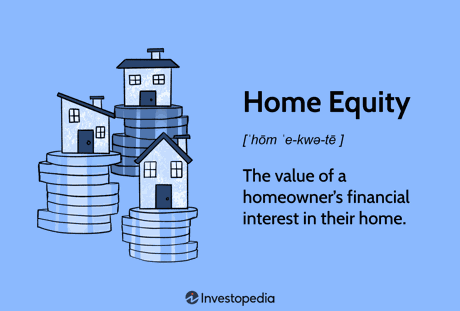
Equity is the wealth that's buried in your house. It's the amount that separates the current value of your home from the remaining balance on your mortgage. As house values increase and you continue to make monthly payments, your equity increases over time. To help you truly grasp how the arithmetic operates, here is an example.

Assume you have $200,000 left on your loan balance and your house has increased in value to $500,000. This indicates that your equity is $300,000. And that's exactly what the average homeowner currently has.

The typical homeowner with a mortgage has almost $302,000 in equity, according to Cotality.

Why You Most Likely Possess More Than You Believe
Homeowners like you currently have nearly record levels of equity for the following two key reasons:


1. A notable increase in the price of homes. Over the past five years, housing prices have increased by almost 54% countrywide, according to the Federal Housing Finance Agency (FHFA).

Because of how much prices have increased over time, your home is probably worth a lot more now than it was when you initially purchased it. If you're concerned because you've heard that prices in some markets are flattening or even declining, know that if you've owned your home for a few years or longer, you probably have enough equity to sell and still make a profit.


2. Individuals are spending more time in their homes. The average homeowner has been in their house for roughly ten years, according to data from the National Association of Realtors (NAR).

It's longer now than it was before. And during that ten years? Simply by paying your mortgage and taking advantage of the increase in house values, you have accrued equity. Because homeownership's financial aspect involves long-term planning rather than focusing on sporadic market fluctuations. And that indicates that you're winning over time.


Here's how much the hidden price increase has benefited you if you're one of those folks who's lived in their house for a while. As stated by NAR:

"Only through price appreciation, the average homeowner has amassed $201,600 in wealth over the last ten years."

Really, what could you do with that equity?
Your equity is more than simply a figure. You can utilize this tool to open the door to your next big move. Depending on your objectives, you may:

Put it toward the purchase of your future house. You might be able to use your equity to assist pay for the down payment on your new house. It may even allow you to pay cash for your next home in certain situations.

Now is the time to update your current home to better fit your needs. Additionally, if you approach your projects strategically, they may increase the worth of your house even more in the event that you decide to sell it in the future.

Launch the company you've always wanted. Your equity can be just what you need for marketing, software, equipment, or beginning expenses. Additionally, that can raise your earning potential, giving you an additional cash boost.

The bottom line
Your house is probably worth a lot of money right now. Speak with a local realtor to do the numbers if you're unsure of your home's worth. In this manner, you will be aware of what you have and where you can proceed.

Posted in General
Sept. 22, 2025

The Best Time to Buy a Home Is Coming Up

You may wish to organize your finances now if you're thinking about purchasing a property. This year's sweet spot for homebuyers will be the week of October 12–18, according to a recent Realtor.com analysis. This is because of a unique combination of cheaper pricing, less competition, and better inventory.
"The 2025 housing market is giving buyers something they haven't had in a long time: options," said Danielle Hale, Realtor.com's chief economist, in a statement following years of restrictive conditions.

"I anticipate that this change in market momentum will amplify normal seasonal patterns that benefit autumn homebuyers. According to data, there will be more homes available for purchase during the week of October 12–18, less competition from other buyers, and the possibility of average savings of over $15,000 when compared to the peak prices of this summer. It's the finest time of year for homebuyers to buy, in what has been the most buyer-friendly year in over ten years.

The possible savings Hale mentioned are predicated on a $439,450 median-priced home.

Buyers should anticipate up to 32.6 percent more active listings than at the beginning of the year, giving them a greater range of houses to pick from, in addition to the discounts. Inventory levels usually peak in the early fall, but this year they've risen to their highest level since before the epidemic, according to Realtor.com.

Historically, compared to peak season, buyer competition is likewise 30.6 percent lower during this week in October. This is due to the fact that housing activity usually begins in the spring and peaks in the summer since many families want to move while their kids are not in school and before the fall academic year begins.

Additionally, properties are usually listed for two weeks longer in October than they are at the busiest time of year, which means that sellers might be more amenable to negotiating (about 5.5 percent of homes are lowered during this period) and buyers won't have to cope with the anxiety of bidding wars.

However, depending on your search, the ideal time to buy may change. Buyer-friendly conditions occur a few weeks earlier, usually in September, in New York, Philadelphia, Chicago, Atlanta, and Dallas, while the October 12–18 timeframe is followed by large metro regions like Houston, Los Angeles, and Washington, D.C. According to Realtor.com, Florida markets, such as those in Miami and Tampa, reach their peak as late as December.

"The market is more balanced than it has been in years, even though it hasn't yet turned into a complete 'buyer's market,'" Hale stated. "After a period of historically low supply and fierce competition that priced out many home shoppers, this represents a significant shift."

Posted in General
Sept. 19, 2025

Top Ten Things to Do in Cincinnati This Weekend September 19-21

The countdown to fall is officially on, and the weekend of September 19-21, 2025, is shaping up to be one of the most exciting of the year in Cincinnati. This is when the city truly shines, with a blend of grand festivals and intimate events. Forget your usual haunts—this is a curated list of special happenings you won't want to miss.

1. Prost! at Oktoberfest Zinzinnati: This is it! The nation's largest Oktoberfest celebration returns to Sawyer Point & Yeatman's Cove from September 18-21. Get ready for four days of traditional German food, beer, live music, and the world-famous Running of the Wieners.

2. See a Broadway Sensation: "Back to the Future": The Aronoff Center for the Arts is taking you on a time-traveling journey with the Broadway production of "Back to the Future." The show is in town from September 9-21, so this is your final weekend to catch the high-tech visual effects and classic rock hits that make this show a must-see.

3. Get Spooky at Halloween Haunt: Kings Island Amusement Park is kicking off its annual Halloween Haunt event on Friday, September 19th. Get ready for a spine-tingling adventure with haunted houses, scare zones, and thrilling rides after dark.

4. Rock Out with the Voice of Whitney: The Cincinnati Pops Orchestra is presenting a spectacular tribute, "The Voice of Whitney: A Symphonic Celebration," at Music Hall from September 20-21. This show features Whitney Houston's original vocals set to new orchestrations.

5. Catch a Reds vs. Cubs Matchup: Head to Great American Ball Park as the Cincinnati Reds face off against the Chicago Cubs. Catch a game on all three days, with a special "Fireworks Friday" on September 19th.

6. Get Your Fill of Independent Film: The Cindependent Film Festival is a three-day celebration of independent filmmaking at Memorial Hall from September 18-20. It's a great opportunity to discover new stories and support local and national filmmakers.

7. Groove with GWAR: For a more intense music experience, the legendary metal band GWAR will be playing at Bogart's on Friday, September 19th. It's a one-of-a-kind show for fans of theatrical rock.

8. Run for a Cause: On Saturday, September 20th, put on your running shoes for the Hudepohl 14K/7K. This race is a fun way to explore the city while getting a workout and supporting a local event.

9. Attend a Neighborhood Festival: The city will be buzzing with smaller, local events. Check out the Peebles Corner Festival or the Billy Joel Block Party at The Banks on Saturday, September 20th for a taste of authentic Cincinnati community life.

10. Experience a Haunted Ship: If haunted attractions are your thing, the USS Nightmare is now open for the season. This haunted house on a real riverboat on the Ohio River provides a truly unique and terrifying experience.


Posted in General
Sept. 17, 2025

Trending: Butter Yellow Exterior Paint

Could a color of paint make you feel better? Does it make your home better? People who work in building, real estate, and interior design all say yes! The August 2025 Trend Tracker from review and resource site Yelp shows that searches for "exterior home painting" have grown by 245%, which is the most in the last five years. Right now, butter yellow is the "it" color. In front of homes, maybe on a street near you, this is how it looks.

Reasons for Butter Yellow?
"People want colors for their homes that make them feel more welcome than ever!" "A buttery yellow is the best way to achieve that goal because it is warm and creamy," says color expert Amy Wax. If there was a single color that could describe a feeling or vibe, it would be yellow, which means happiness! She says it's a very natural color that goes well with nature without taking over.

Wax thinks butter yellow is part of a bigger trend: "I think sweet colors are popular for the outside, colors that are soothing, charming, and really inviting!" When people ask for outdoor colors, soft greens, blues that aren't too strong, and yellows that aren't too bright are definitely what people want. When I make a color scheme for a home, the colors have to fit the style and tastes of the people who live there. Having said that, I'm seeing more calls for color and people moving away from the whites, grays, and neutrals of the past few seasons.

Tara Lewis, a trend expert for Yelp, agrees: "Right now, there's a bigger shift happening. People are moving away from all the grays and beige and toward maximalist and dopamine decor." It looks great with everything because butter yellow is a warm neutral color that still feels bright and fun.

A lot of the professionals this story talked to seemed to agree on how happy butter yellow is. The founder of the online home repair store The Trade Table, Forrest Webber, says, "After years of gray being the most popular color for exteriors, people are now looking for warmer, more uplifting colors." Butter yellow is a good color because it has the happiness of a bright color and the polished softness of a pastel. It gives a room a new look that still fits in with the rest of the neighborhood. Just like his coworkers, he thinks it looks great in kitchens, breakfast nooks, and laundry rooms, which are "places where homeowners want a light, uplifting feel." (The main rooms in my house are butter yellow.)

Emily Kantz, color marketing manager at Sherwin-Williams, says this about butter yellow: "It goes with a lot of different architectural styles, from coastal and colonial to mid-century modern, craftsman, and farmhouse." People all over the country love it because of that and the warm color.


Trendy Shops
Kate Hendrickson, an associate realtor with Better Homes and Gardens Real Estate Haven Properties in San Luis Obispo, says, "Butter yellow is having a moment, and it doesn't surprise me at all." Butter yellow is being used on cute Craftsman-style homes and coastal cottages in my Central California area. People are buying it because it has a happy, sunny vibe that Gen Z and Millennial buyers love because they want warmth, character, and charm.


Alli Pepperling, a Compass broker in the Raleigh area, says, "Butter yellow is gaining a lot of traction in our Triangle market, and I'm seeing it have a real effect on buyer interest and sales velocity." For her, it seems like it will last. "Butter yellow looks great on homes that have Southern charm and personality," she says.

Gary Baxter, a licensed general builder, agrees. "Butter yellow is starting to show up in our Metro Atlanta and North Georgia market. This is especially true for people who want to update older homes or build new homes in neighborhoods that value a warm, welcoming front porch." There are more calls now than there were a couple of years ago, but it's not yet taking over the market. He says that the prices of both paint and panels are going up.

A little further down the coast, in Savannah, Casey Ricks of Baywater Custom Builders is seeing more butter yellow, but it hasn't taken over yet. "It's not a color we see very often on the outside of homes, but when a client picks it, it really stands out and makes a nice, welcoming first impression."

Kathie Chrisicos, an interior designer and real estate agent at William Raveis in Back Bay, Boston, says that butter yellow is a favorite "quiet soft shade" for the outside of homes in New England, especially "in our seaside cities and towns." She thinks it adds to the charm of small houses with a historic look. "In our established neighborhoods," she adds, "I have seen butter yellow make a classic New England Colonial stand out from its neighbors."

Opportunity in a niche
Mark Lumpkin, founder of STR Cribs, helps owners of short-term rentals across the country make their homes more appealing to travelers using VRBO and Airbnb. This gives him a unique view of color and design trends in a wide range of markets. He sees a shift toward butter yellow, especially in coastal and cottage homes, but he can't put his finger on a single reason. Along with ideas about how sweet, nostalgic, and "happy" it is, Lumpkin brings up a tactical point that could be very important: "We have found that this color looks good in photos taken during the "golden hour" of natural light in rooms that are rented out for short periods of time," he says.

Watch out!
Wax warns that not all yellows are the same. "Yellow that is smooth and light can make you feel warm and welcome." When the yellow is too strong, it can make people feel tense and irritated. It is very important to pick the right yellow for your house, whether it's inside or outside!

Even the real estate site Zillow agrees. It says in its Summer 2025 paint color report, "Buyers would pay almost $4,000 less for a home with a daisy yellow kitchen ($3,915 less) or living room ($3,891 less”). Butter lovers, be careful!

Not for everyone
People don't always choose butter yellow, and the reason for this is that building materials and styles vary from place to place. Christy Walker, realtor and owner of REMAX Signature in Phoenix, says that natural and neutral colors are most popular in her market because of stucco and tile roofs. "Also, HOAs have a lot of control over what colors can be used. And while trends come and go, they don't usually change their rules to allow colors that might not go with the overall look they've created with desert colors," she says.

Cindy Chen, a Compass realtor in New York City, is seeing more butter yellow used inside homes. When it comes to the outside, Chen thinks it looks great on cottage and bungalow-style houses. There aren't as many of these in the city market as there are in other markets.

In conclusion
"Soothing colors are the ones that make people feel the most at ease," Wax says, naming butter yellow, soft blues, greens, and salmon pinks. "The colors that are easiest on the eyes and most pleasant to live with are the ones that calm you down at the end of the day!" And these days and nights, who wouldn't want something soothing?

Read more at Forbes.

Posted in General