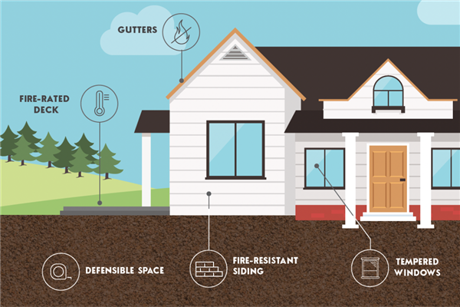
Severe weather can cause thousands of dollars' worth of damage to your house. For this reason, house hardening is a rapidly expanding trend among homeowners who want to safeguard both their homes and their finances.
Making improvements to your home that especially guard against weather and climatic calamities is known as "home hardening." When you decide to sell, certain initiatives don't provide a return on your investment, and not all of them are essential. However, the right upgrades are valued by potential buyers. For advice on the improvements with the biggest impact and highest return on investment, we consulted professionals in the field of climate readiness.
The Benefits of Renovations to Harden Your Home
According to Peter Piotrowski, chief claims officer of Hippo Insurance, "the best weather-resistant home hardening upgrades depend on several factors, including the materials used in your home, its location, and local weather risks."
Piotrowski continues, "According to Hippo's Extreme Weather Survey1, a significant majority of homeowners (88%) stated that they would be willing to pay more for a home with climate-resilient features, with one in five stating that they would be willing to pay up to $10,000 more for a home built to withstand extreme weather."
According to Lauren Dowling, a senior vice president at World Insurance, "properties with impact windows, fire-resistant materials, backup power, and flood mitigation features are already seeing increased interest from real estate professionals in high-risk areas." These properties typically sell more quickly, stand out in real estate listings, and cause fewer issues when inspected or reviewed by insurance. The need for resilient housing is only anticipated to increase as long as climate events persist.
Selecting Appropriate Home Improvements
Both existing homeowners and prospective homebuyers are growing increasingly interested in strategies to safeguard their properties as more catastrophic weather events occur each year.
According to Piotrowski, "Homeowners' concern for extreme weather preparedness increased year over year, with 25% reporting it as a top issue in 2023 and 28% in 2024," according to our 2025 HousePower Report2. "All of this suggests that homeowners are becoming more interested in climate-conscious design and are becoming more concerned about protecting their home and long-term financial stability."
According to Coldwell Banker Warburg agent Aaron Tetzlaff, he has personally witnessed how these improvements are becoming increasingly significant to insurers, purchasers, and homeowners. Upgrades that are both functional and visible typically yield the highest return from a real estate standpoint, he says.
It shouldn't be a guessing game to protect your house and guarantee a return on your investment. Depending on where you live, certain enhancements indicate a comeback.
Geographical Variability in Home Hardening
"Geography has a significant impact on return on investment. Storm shutters and reinforced garage doors, for instance, are essentially non-negotiable in Florida, according to Tetzlaff. "In the meantime, fire-rated materials, defensible space, and hardened roofs have a direct impact on insurability and resale in California."
The game alters once more as you move eastward. "Upgrades in flood mitigation, such as wet flood-proofing or back-flow preventers, are increasingly expected for us on the East Coast in coastal or low-lying areas," Tetzlaff continues.
Whether your home-hardening methods are important to prospective purchasers depends on where you reside. According to Tetzlaff, "buyers are getting more informed and frequently inquire about these features before even touring a home." The buyers' perception of value has a direct impact on your return on investment.
"You're not only better protected, but you're also helping preserve your home's long-term value when your home is equipped with climate-resilient upgrades that protect it from severe weather in your area," Piotrowski continues. These improvements not only pique the curiosity of potential purchasers, but they also immediately improve your financial situation through government incentives and rebates.
Location-Specific Financial Rewards
"Depending on the location, there are an increasing number of financial incentives," Tetzlaff states. "Always inquire about incentives and rebates with your state, county, and local municipality."
The Federal Emergency Management Agency provides funding to municipalities and people that make specific renovations, in addition to hyperlocal offerings. Certain states provide retrofitting subsidies for wildfire safety, such as California's Wildfire Prepared Home program. Federal tax incentives are also available for Energy Star-certified roofs, windows, and insulation.
According to Tetzlaff, homeowners can frequently recoup 10–30% of project expenses through these initiatives, significantly increasing return on investment.
The Top 5 Home Renovations with the Highest ROI
According to experts, these upgrades yield the highest return on investment when sold.
1. Improvements to Drainage
Enhancing the drainage around your house, whether it be through landscaping or downspouts, is a smart idea for routine home maintenance and an essential update for residents in regions that frequently experience rain and hurricane and other storm threats.
According to Coldwell Banker Warburg broker Suzanne Weinstein, "there are several ways to improve drainage." "First, ensure sure the downspouts transport the water a reasonable distance from the house and maintain gutters in good condition. The second option is to install a French drain on the outside of the house, together with a drain pipe to transport extra water to the street. Third, think about requesting financial assistance from the city or township to install a drain that you may use to link your property's runoff if water collects on the street outside your house during storms.
According to Weinstein, "preventing water from accumulating on your property will do a lot to maintain its condition and value." "These can have a significant impact on hurricanes, tropical storms, and downpours, but they won't do much in catastrophic situations."
Piotrowski advises investigating improvements to your home's structure and systems in addition to landscaping to guard against flood damage. "To avoid expensive damage, it's crucial to make additional improvements like installing sump pumps and caulking foundation cracks," he explains. "One of the most frequent and expensive problems for homeowners is water damage, so it's critical to recognize your risks and take precautions against them."
You can obtain flood insurance more easily when you implement improvements that reduce the risk of flooding. "A lot of homeowners are unaware that a typical homeowners insurance policy does not cover flood damage," Piotrowski explains. "Flood insurance can contribute to extra financial security. Only a small portion of households obtain flood insurance, despite the fact that flooding occurs in 99% of U.S. counties.
2. Doors and Windows That Resist Impact
Installing impact-resistant windows and doors is another crucial improvement for residents in hurricane-prone areas. According to Coldwell Banker Warburg broker Bill Kowalczuk, "they look great, they're new, they add curb appeal, they boost security, and they can lower your insurance."
It has a multifaceted effect on the value of your house. Tetzlaff continues, "They enhance energy efficiency, noise reduction, and aesthetics in addition to providing storm protection."
Kowalczuk advises against installing ornamental storm shutters while you're improving this area. "There's a reason they're called decorative," he explains. "In reality, they don't protect anything."
3. Roofs that are fireproof
Catastrophic wildfires occur annually in states like California. You can install fireproof cladding and roofing to your house to protect it from less severe flames.
According to Harry Statter, a wildfire ecologist and the creator of Frontline Wildfire Defense, "the roof is a critically vulnerable area as it is the largest and most exposed exterior surface on a home." The likelihood of fire is significantly decreased by a Class A Fire-rated roof's resistance to radiant heat and ember ignition. Additionally, a new roof tends to increase a home's market value.
Only if you reside in a region that experiences frequent fire threats is fireproof roofing beneficial for return on investment. According to Tetzlaff, "these upgrades add significant value and are often viewed as essential rather than optional, especially in wildfire-prone areas."
Common options include composite, metal, and clay shingles. Just be careful to use high-quality materials," Kowalczuk continues. He advises avoiding less successful choices like fire-retardant sprays or coatings if you want to safeguard against wildfires using strategies that are both effective and cost-efficient.
"They won't accomplish much on their own," Kowalczuk claims. They are only effective when included in a comprehensive fire safety system. It is essentially pointless to do this alone.
4. Improvements to Smart Homes
Nowadays, almost every significant home system and product has smart home capabilities. These enhancements range from video doorbells to smart thermostats. Investing in smart home systems with features that notify you of significant issues is one specific method of hardening your house.
Automatic water shut-off valves and leak monitoring systems are recommended by Dowling. One of the most common and expensive insurance claims is for water damage. "These systems can stop thousands of dollars in losses by identifying problems early," she says.
According to Dowling, central station fire alarms and monitored smoke detectors can significantly lessen the severity of fire damage since they provide early detection and guarantee a prompt response from first responders.
Surge protection systems, which come in normal and smart home varieties, are perfect for locations where electrical issues are common. These shield expensive gadgets and appliances from harm brought on by lightning strikes or power outages, according to Dowling.
5. Power Plants
Power outages caused by severe storms of various types can be dangerous at worst and expensive at best. Whole-home backup generators keep your gadgets charged and ready while guaranteeing that your food won't go bad and that you may continue using life-saving medical equipment.
"They help maintain climate control, prevent frozen pipes, and keep sump pumps running, which is especially valuable in areas prone to outages," according to Dowling.
If you choose a generator that is not utilized often, you won't get much use out of it, just like other upgrades on this list. Generators are among the resilience items that, according to Tetzlaff, "don't live up to their marketing." He advises against investing in off-grid solutions or oversized generators unless you experience regular and protracted outages.