Shutdown of the Government
The government shutdown resulted in the non-release of several critical reports, which left investors largely in the dark, as opposed to the customary first week of the month, which is typically characterized by the release of significant economic data. There was minimal response to the most recent economic data that private companies had collected. As a consequence, mortgage rates concluded the week at a minor decline, approaching their lowest point of the year.
Government shutdowns have historically had minimal long-term consequences for mortgage markets. That being said, the consequences of the closure will be more severe as it continues. The most apparent issue in the immediate future is the delay in the publication of economic reports from government agencies, which include critical inflation and labor market indicators. In addition, the cessation of government data collection may raise some concerns among economists regarding the precision of the October reports, should they be released. It is also important to mention that private companies are the source of a reasonable quantity of labor market data; however, they are unable to provide much information about inflation. In the long term, investors will be primarily interested in determining whether there is a permanent decrease in government employment, which could result in a decrease in consumer expenditure and a slower pace of economic growth.
The Institute of Supply Management issued two substantial economic reports this week, which yielded inconsistent outcomes. The national manufacturing index increased to 49.1, while the ISM national services sector index unexpectedly decreased to 50.0, the lowest level since May. Sector expansion is indicated by readings exceeding 50, while contraction is indicated by readings below 50. Service companies are still outperforming, but manufacturing companies may experience an increase in revenue as a result of increased tariffs on foreign products.
The Conference Board's most recent report on consumer confidence indicates that consumers continue to harbor reservations regarding the consequences of tariff increases and the government closure. In June, the index experienced a significant decline, settling at 94.2, which is significantly lower than the consensus forecast of 96.0 and the lowest level since April. The decline was observed in virtually all income and age groups. Specifically, the labor market's prospects were diminished. The percentage of consumers who perceive job availability as abundant decreased for the ninth consecutive month, reaching its lowest point since February 2021.
The Week Ahead
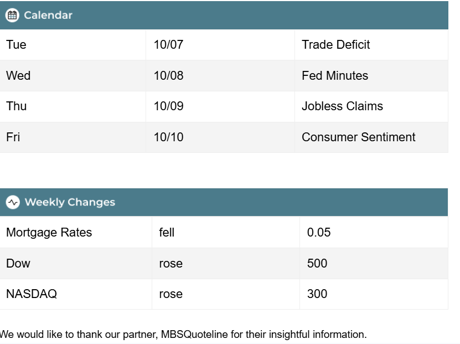
In the future, investors will continue to monitor comments from Fed officials for hints about monetary policy later in the year and wait for additional information about tariffs. It was anticipated that the week would be exceedingly sparse in terms of economic reports. There is a possibility that no substantial economic data will be released next week due to the government closure. The Trade Deficit is scheduled to be released on Tuesday.