April 18, 2025

Moving Plans on Hold? Why It May Be Time To Start Them Back Up

Seventy percent of purchasers stopped looking for a house last year; perhaps you were among them. Making sense is what it does. Prices were high, inventory was low, and mortgage rates rode like a rollercoaster. All of that made finding a house you loved and within budget quite difficult.
Guess what, though? The sector is changing.

It may thus be appropriate to hit play once you stopped your relocation preparations in 2024. Here's the rationale.

More inventory opens up more possibilities.

Even if you could make the arithmetic work, the dearth of suitable properties in recent years most likely made it difficult to find something. But inventory is growing, hence your choices now have more possibilities.

Realtor.com reports that since this time last year, inventory had surged 27.5%.

You therefore have more options than you did a year ago if you were reluctant to list your house because you weren't sure where you would go should it sell. That's rather a win.

Homes are staying on the market longer as well.

When there is a limited quantity of properties for sale, they are swiftly grabbed there just not enough of them to go around. And a few years ago, that meant your house could sell over night. Although that's not necessarily a negative thing, a slower pace is not the end of the world if you are planning a relocation and also need to find your future house. Actually, it's much needed relief.

Now that inventory has expanded, homes are remaining on the market longer, so you are not under as much rush throughout the process.

The average time homes spend on the market increased by almost 8% this year, compared to past years; this is more than we have seen before 2020, but still a faster rate than before the market surged. And it's around one week longer than last year. Talk about a moving sweet spot. Though it seems like only a few days, it allows you more time and freedom to consider your choices carefully. As Senior Economic Research Analyst at Realtor.com Hannah Jones observes:

"Many sellers are more flexible and the market speed is a bit more manageable as there are more homes for sale than in the past few years. Longer days on market help to reflect this. Even in the hectic spring and summer, buyers may find a little more give in the market, which would allow more time to make a decision despite still-high house prices.

And if you're thinking, but wait, does it follow that selling my house will prove more difficult? Not worry. Well-priced properties are selling, particularly as more buyers enter the game this season; inventory is still about 23% below the pre-pandemic norm.

Main Point

Growing inventory allows sellers who wish to downsize, relocate, or upgrade more options. Furthermore, if you put your house hunt on hold, it could be a perfect opportunity to review it given less pressure to make an offer right now.

Ready to move? Move in state, out of state, or cross town? Let's sell and buy a home with the Hersey Group

April 16, 2025

Fewer investors were home flipping in 2024

In 2024, home flipping by investors decreased as margins improved, yet they remained below the levels observed in the majority of the preceding decade.


The average return of 29.6% over a brief period may appear appealing to investors across various asset classes; however, it remains significantly lower than the 54.2% peak observed in 2016. Despite improvements over the averages of 2023 and 2022, the proportion of home sales in the US that were flipped, at 7.6%, experienced a decline of nearly 8% year-over-year and over 32% compared to 2022.

The return on investment for median-priced home flips across the nation has decreased by 16 percentage points since 2020 and is down by 25 points from the peak observed in the last ten years.

Data from property analytics firm ATTOM indicates that the gross profit on a typical buy-renovate-and-resell project nationwide was $72,000 last year, an increase from nearly $68,000 in 2023.

The home-flipping industry experienced a further decline in investor participation in 2024 due to a prolonged period of stagnant profits. Despite the decline in activity, there was a slight indication that returns were beginning to improve, according to Rob Barber, CEO of ATTOM. "Although home flippers continue to face challenges in market timing for substantial profits, their margins have stabilized and are no longer declining."

Approximately two-thirds of US metropolitan statistical areas experienced a decline in home flipping last year, with the most significant reductions occurring in the South and West regions.

Outlook for 2025

As the first quarter of 2025 approaches its conclusion, Barber indicates that market navigation will present challenges for investors.

This year presents considerable uncertainty for investors due to a limited supply of homes for sale, a decrease in low-priced foreclosure properties, varied economic forecasts, and high mortgage rates. They must engage in strategic purchasing and prompt renovations to sustain the profit recovery.

Recent data from the National Association of Realtors indicates that the growth of home prices continues to accelerate.

In February, existing-home sales increased by 4.2%, while the median sales price rose by 3.8% year-over-year to $398,400, marking the 20th consecutive month of price increases on a year-over-year basis.

Price increases may hinder market entry for investors and elevate margins; however, they benefit current homeowners, particularly in light of the increased instances of negative equity reported at the end of the previous year.

According to NAR Chief Economist Lawrence Yun, a one percentage point increase in home prices corresponds to an estimated $350 billion rise in housing equity for American property owners. A nearly $1.3 trillion increase in home value appreciation occurs concurrently with a correction in the current stock market. The current housing shortage, along with historically low mortgage default rates, indicates a strong basis for home values.

Do you want to make your home investment in Ohio? Check out the home listings with the Hersey Group.

April 14, 2025

Tricks to Prevent Weeds From Invading Your Lawn This Summer

Commonly a challenge for many homeowners, weeds are plants that grow where they are not wanted. Most weeds have substantial seed output, fast germination and establishment, and seeds that lie latent for a long time. For instance, one redroot pigweed might generate up to 30,000 seeds year. For more than 70 years, those seeds lie dormant in the ground, waiting to burst forth.


Why Do Weed Problems Occur?

Bad soil conditions, like compacted or poorly drained soil, can let weeds outcompete desired plants in a given area. Incorrect mowing, watering, and fertilizer among other improper lawn care techniques could weaken your grass and increase its vulnerability to weed invasion. Furthermore, disturbances to the ground—often brought on by landscaping or building projects—can push latent weed seeds to the surface where they unexpectedly sprout and flourish.

A weaker and less appealing lawn results from weeds vying with your grass and plants for water, nutrients, and sunlight. They also host pests and diseases that compromise your yard more broadly. Certain weeds are also invading species that might affect nearby ecosystems outside of your yard. This is a tip on how to stop weeds from invading your yard so you might avoid these effects.

Natural Strategies for Weed Control

Eliminating an established weed infestation takes more time than stopping weeds when they show up or shortly following budding. Natural weed control strategies concentrate on maintaining a healthy lawn by inhibiting weed growth. Natural weed management techniques consist on the following.

Chowing

Cover garden beds with organic mulch—wood chips or straw—along with bases for trees and shrubs. As it breaks down, mulch improves soil health, helps to retain moisture, and controls weeds. Teri Valenzuela, natural science manager for Sunday's lawn care firm, advises adding mulch or plant ground cover to prevent sunlight and minimize open ground area where weeds could grow. " Try for a mulch covering two to four inches deep. Mulching also serves as a barrier against weeds and helps preserve soil moisture."

Preserving Good Soil

Test the pH and nutrient contents of your soil often. To raise fertility, you might have to mix it with organic stuff like compost. Strong grass growth brought about by healthy soil can outcompete weeds. Also, use caution with fertiliser. While too little fertilizer might result in rarely used soil rapidly overrun with weeds, too much fertilizer can help nourish weeds including annual bluegrass, Bermuda grass, or crabgrass.

Mowing Rightfully

For your type of grass, mow your lawn to the suggested height. Taller grass shades the ground, which makes it more difficult for weed seeds to germinate.

Providing Enough Water

Water your grass deeply and infrequently instead of shallowly and often. Deep watering promotes root development, so enabling grass to survive drought and fight against weeds. Early in the morning, water to reduce evaporation and fungus growth. Remember, short roots resulting from regular light irrigation enable some weeds flourish.

Hand Clearing

Look over your lawn and garden often for weeds. "If weeds do present themselves, remove them by hand or with a flexible weeding tool, making sure you get the roots to prevent regrowth," says Valenzuela. Pulling the entire root system is simpler when the soil is damp since hand weeding is most successful in that condition.

Ground Covers

In places where grass finds difficult to flourish, lay ground cover. For example, creeping thyme or clover can fight weeds and offer a low-maintenance substitute for conventional lawns.

Natural Insecticides

Organic herbicides derived from vinegar, salt, or citrus oil can be quite successful against some weeds for a more ecologically acceptable solution. For pets, children, and beneficial insects, they provide a safer substitute even if they could need more regular and consistent application.

Chemical Strategies to Stop Weeds

Although they offer more quick results in weed control, chemical approaches must be handled carefully to reduce environmental effect. The most often used chemical method is herbicide application.

Pre-Emergent Pesticides

Before weed seeds germinate, herbicides—including those with oryzalin, trifluralin, or non-toxic maize gluten meal—are sprayed on the ground. They provide a chemical barrier stopping the sprouting of weed seeds. With pre-emergent herbicides, timing is really vital. The weed species you are aiming for should guide your application—early spring or fall. Use pesticides always according to the label directions. Effective weed control depends on correct application rates, timing, and safety procedures that limit hazards to the environment, people, and animals.

Post-Emergent Pesticides

These pesticides wipe out current weeds. They can be non-selective, destroying all the vegetation they come into touch with, or selective, focusing on particular weed species without damaging grass. Lawns are best suited for selective herbicides; non-selective herbicides are useful for places like driveways and sidewalks. Use spot treatments to target particular weed spots rather than chemicals all over your grass. This method lowers possible damage to desired plants and soil condition as well as pesticides.

Why Are Weeds So Unwanted?

Stopping weeds calls for more than just eliminating unwelcome flora. Laura Iles, director of North Central Integrated Pest Management Center at Iowa State University, advises cutting weedy areas in or near your yard to also lessen tick habitat. Other unwelcome bugs that are harmful to children, adults, and pets; ticks can cause crippling illness; plants provide an ideal habitat for them.

Whether your preferred approach is chemical, natural, or combined, keep alert and aggressive in your weed management activities. A well-kept lawn looks fantastic and helps to create a more resilient, healthy ecosystem for all.


Do you want a home with a nice weed free lawn? Or maybe a work in progress? Check out the home listings with the Hersey Group.


April 11, 2025

Weary Gen Z Homebuyers Still In the Market To Purchase

The 2025 ServiceLink State of Homebuying Report (SOHBR), which is now in its fifth year, was published today and found that although Gen Z is still eager and prepared to purchase a home this year, high mortgage rates and home prices may discourage them from doing so.
Compared to 51% of millennials, 49% of Gen X, and 22% of baby boomers, 67% of Gen Z respondents stated they intended to buy a home this year.

However, Gen Z also topped all respondents in terms of their readiness to give up in the face of challenging purchasing circumstances, with 58% reporting that they gave up on the home-buying process in 2024 and 38% stating that they had failed to make a purchase within the previous four years.

The yearly poll conducted by ServiceLink examines generational patterns among current and potential homebuyers, as well as their intentions to buy, refinance, or use home equity this year.

According to Dave Steinmetz, president of origination services at ServiceLink, "these findings show that despite the ups and downs of today's market, there is still a strong appetite for homeownership, particularly among the youngest generation." In order to fulfill their dream of becoming homeowners, today's buyers must be well-informed, patient, and adaptable. This gives lenders a chance to leverage technology and expand the offerings that purchasers have shown a desire to see. In order to satisfy the demands of today's buyers, lenders should also concentrate on education and enhancing transparency.

41% of all respondents stated that they think the circumstances are ideal for purchasing a home this year, notwithstanding Gen Z's declining tolerance for the difficulties associated with home ownership. Among Gen Z, 52% had a positive outlook on the market, compared to only 23% of baby boomers.

According to ServiceLink, buyers are becoming less inclined to purchase with high mortgage rates this year. The average mortgage rate, according to Gen Z respondents, is 5.1%, and they would think about raising it to 5.8%, which is lower than the 6.3% rate from the previous year.

With their ceiling falling from 6.2% in 2024 to 5.5% now, millennials are likewise growing less receptive to rising rates. Millennials are, however, reversing their intentions to buy a home; only 51% of them still intend to do so in 2025, compared to 59% in 2024 and 61% in 2023. Just 46% of millennials stated that the market would be favorable for purchases in 2025, a decline from 60% in 2023.

But according to Gen X survey results, there will be a resurgence of interest in home ownership in 2025. Compared to 45% in 2024, 25% in 2023, and 12% in 2022, 49% of Gen X respondents stated they intended to purchase this year.

Technology and Space Are In High Demand

39% of respondents stated they would like to see greater physical space between homes, and 60% of respondents who expect to buy a home within the next year stated they are looking for a home with more space—a 17% increase from a year ago.

Small home size was also mentioned by more than half (51%) of respondents as a deal breaker. Higher taxes (48%), a lack of privacy or too close-together residences (43%), and a lack of outdoor space (33%), are other major deal-breakers.

As they negotiate the home-buying process, the respondents also expect their lenders to be tech-savvy. According to 59% of respondents, the convenience and ease of use of mortgage technology are its greatest advantages. Of those surveyed, 51% said they like the time savings it offers, and 45% prefer the flexibility it gives them to go at their own pace.

eSigning technology was mentioned by a large percentage of respondents (62%) as something they used at home. 70% of baby boomers used eSigning, compared to 42% of Gen Z respondents.

Are you a Gen Z homebuyer and looking at the Cincinnati OH market? Talk with the Hersey Group so they can lead you on your home journey. 

Posted in General
April 9, 2025

Cincinnati OH’s Best Resource for Homes for Sale

Check out The Hersey Group for all the home listings in Cincinnati Ohio, updated as fast as the MLS changes.

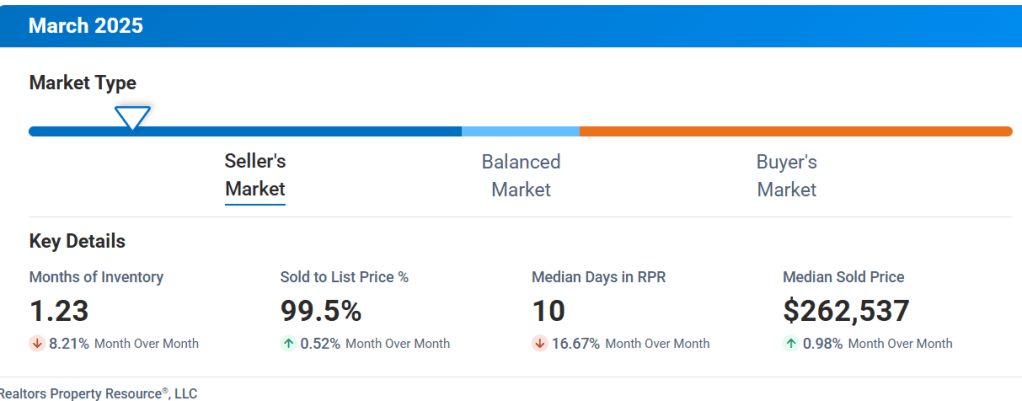
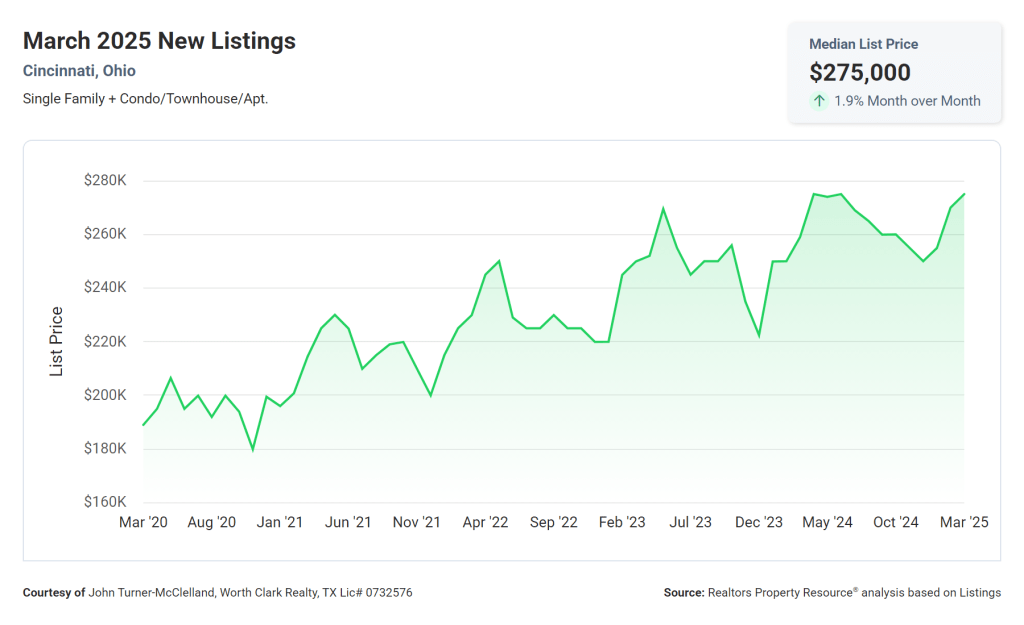
Cincinnati Ohio continues to show a strong seller’s market, with only 1.23 months of inventory on the active market and only 10 days on market on average. A median list price of $275,000 still makes the market affordable for most buyers, even though it has increased again in March 2025.

The highest priced home for sale in Cincinnati OH is listed at $3,999.999. MLS#1818706.

The lowest priced home for sale in Cincinnati OH is listed at $40,000. MLS#1835895.

Looking ahead, the forecast for the remainder of 2025 suggests a few key trends. Mortgage rates, after peaking in late 2024, are expected to gradually decline but remain in the mid-to-high 6% range for most of the year. This stabilization could improve affordability for buyers. Inventory levels are anticipated to increase modestly, offering buyers more choices, particularly in suburban areas like Mason, West Chester, and Loveland. Experts predict a slow to moderate annual appreciation rate for home prices nationally, in the range of 3-5%. Cincinnati, being an affordable Midwest market with steady job growth, is expected to see continued demand. Therefore, while not expecting dramatic price surges, the Cincinnati market is likely to remain active with a balance of opportunities for both buyers and sellers.

The Hersey Group brokered by FIV Realty

9979 Montgomery Rd, Cincinnati, OH, 45242

513-835-5506

Posted in General
April 8, 2025

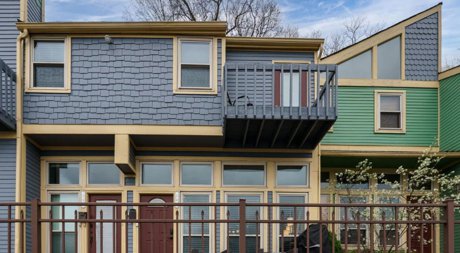
First Time Buyers & Townhomes in Cincinnati OH

It can be difficult to purchase your first house in the current market. With rising mortgage rates and property prices, affordability remains a major problem. Additionally, some purchasers are making a straightforward trade-off—square footage—that will enable them to move in sooner.


The National Association of Home Builders (NAHB) reports that 35% of purchasers are prepared to make a smaller purchase in order to achieve homeownership. Townhomes are another location where you may typically find a smaller footprint (and occasionally better pricing).

The Reasons Behind the Growing Adoption of Townhomes

Because of their smaller size, townhomes are usually less expensive than single-family homes. And for today's frugal customer, that is a huge plus. According to Realtor.com:

Affordability is still a top concern for purchasers in the current market, which makes townhomes a desirable alternative because they are frequently less expensive than single-family homes. They are particularly attractive to first-time homebuyers on a limited budget because of this.

Moving your emphasis to townhomes could be one method to become a homeowner without going over your budget if you're attempting to buy but are feeling trapped due of escalating prices.

Builders Are Meeting Demand

Builders are adapting to fulfill the demand after observing a trend in buyer preferences toward smaller homes. As explained by Joel Berner, Senior Economist at Realtor.com:

In contrast to the current house market, builders are working hard to offer the market smaller, more reasonably priced inventory. A large part of that endeavor consists of townhomes.

And the figures support that. Townhomes now account for a larger percentage of new construction listings than they did just a few years ago, according to statistics from Realtor.com.

This implies that you now have more options than you did in previous years if you're interested in this kind of home. Additionally, having more options that might be more reasonably priced is undoubtedly beneficial. It ought to ease the process of finding your first house.

Are You a Good Fit for a Townhome?

An agent can assist you in determining whether a townhome might be a good fit for you if your attention has been only on more conventional homes with private yards. You might discover that you enjoy the way of life. Many people do. According to an article published by the National Association of Realtors (NAR),

"Young professionals who might prefer medium-density, walkable neighborhoods may find townhomes appealing as they are typically less expensive than single-family detached homes."

This is because they have their own special amenities, need less upkeep, and can foster a feeling of community among inhabitants. Additionally, they allow you to begin accumulating wealth through homeownership without having to deal with the maintenance that comes with owning a detached, single-family house. For first-time buyers who are already a little concerned about maintenance, that can be fantastic.

However, there are additional factors to take into account, such as managing noise through shared walls. If you now rent, you may already be accustomed to that. However, these are the kinds of things you should consider. And that's when the knowledge of an agent is useful. Before you make your choice, they will assist you in balancing the advantages and disadvantages so you can see how a townhome fits into your long-term objectives and lifestyle.

The Bottom Line

It might be time to broaden your search and take into account possibilities you haven't previously considered, such as townhomes, if you're having trouble finding a house within your price range. In order to gain access, it can occasionally be worthwhile to make a small space compromise.

Are you ready to purchase a townhome in Cincinnati OH? Then check out the home listings and get with the Hersey Group for a tour.

Posted in General
Aug. 16, 2024

Inventory is Rising in Lakota School District

As of Friday, August 16th. There are currently 62 single family homes and condos available for sale UNDER $500,000 in Liberty Township, Ohio and West Chester, Ohio. The inventory has continued to rise, check out all of the listings available in Lakota School District here.

July 22, 2024

Is a Pool a Good Investment for Your Home?

Is a Pool a Good Investment for Your Home? 

Here are a few pros and cons to consider before adding a pool to your home.

When it comes to deciding on home improvements, you want to make wise investments that enhance your property's value, while also making choices that contribute to your enjoyment of your home. Pools, for example, rate high on the list of enjoyable home features, but you may question whether they are a good financial decision. Before taking the plunge, it's important to evaluate the pros and cons to determine if a pool is a good decision for you.

The Pros of Installing a Pool for Your Home

  1. Increased Property Value: A well-maintained pool can enhance your home's market value. In regions with warmer climates or where pools are highly sought after, having a pool can be an attractive feature for potential buyers, potentially leading to a higher selling price. 

  2. Lifestyle and Recreation: A pool offers endless opportunities for relaxation, entertainment, and exercise. It can serve as a hub for family gatherings, parties, and outdoor activities, creating lasting memories and enriching your quality of life. 

  3. Curb Appeal: A visually appealing pool, complemented by well-designed landscaping, can significantly enhance the overall aesthetic appeal of your property. It adds an element of luxury and sophistication, making your home stand out in the neighborhood. 

  4. Health and Well-being: Swimming is an excellent low-impact exercise that provides numerous health benefits, such as improved cardiovascular fitness, increased muscle tone, and stress relief. Having a pool at your doorstep encourages regular physical activity and promotes a healthier lifestyle. 

    Homes with Pools #onthemarketnow!

    Is a pool on your list of must-haves? Check out local homes for sale with backyard pools or community access! Click the link below and filter your results by adding a location or school district at the top of the results page.

    Search for Homes with a Pool

The Cons of Installing a Pool for Your Home

  1. High Installation and Maintenance Costs: Pools require a significant financial investment, including the initial construction costs, permits, and ongoing maintenance expenses. From regular cleaning and water treatments to energy costs for heating and filtration, these expenses can add up over time. 

  2. Limited Use and Seasonal Considerations: Depending on your geographical location, a pool may have limited use throughout the year, particularly in colder climates. You must consider the relatively short swimming season and evaluate whether the investment justifies the limited time for enjoyment. 

  3. Potential Safety Concerns: Pools come with inherent safety risks, especially if you have children or pets. Implementing safety measures such as fences, alarms, and pool covers is crucial, but these additional precautions add to the overall costs. 

  4. Potential Buyer Preferences: While some homebuyers consider a pool a desirable feature, others may perceive it as a liability. Families with young children or those seeking low-maintenance properties might be deterred by the responsibilities associated with pool ownership, potentially limiting your buyer pool when it's time to sell. 

Deciding whether a pool is a good investment for your home requires careful consideration of various factors, including your budget, lifestyle, location, and long-term plans. While a well-designed pool can add value, aesthetic appeal, and recreational opportunities to your property, it's important to weigh the associated costs and potential drawbacks. Ultimately, the decision should align with your preferences, financial situation, and long-term goals for your property. 

June 17, 2024

Ohio Homes at Your Fingertips: Interactive Map Unveils Every Listing

House hunting in Ohio just got a whole lot easier! Imagine a visual tool that lets you see every single home currently available for sale across the entire state. No more endless scrolling through listings or missing out on hidden gems. This interactive map is here to revolutionize your search. With a few clicks, you can filter by location, price range, and property type, making it easier than ever to find your perfect match. So, whether you're a first-time buyer searching for a cozy starter home or a growing family looking for more space, this map is your one-stop shop for navigating the Ohio housing market.

Homes For Sale in Ohio - Mapped


https://www.google.com/maps/d/u/0/edit?mid=1f2Nlm9mqd7qsgV2NmhbA64DgRetlSPU&usp=sharing

April 21, 2024

The Benefits of Buying a Green Home

The Benefits of Buying a Green Home

Here are 6 reasons why buying a green home makes sense for homebuyers.


Green homes are becoming increasingly popular as people become more aware of the impact that their homes have on the environment. These homes are designed to be energy-efficient, eco-friendly, and sustainable, and they offer a wide range of benefits for homebuyers. If you're in the market for a new home, below are 6 reasons why you should consider buying a green home.

1. Lower Energy Bills 

One of the most significant benefits of green homes is that they are designed to be energy efficient. This means that they use less energy than traditional homes, which results in lower energy bills for homeowners. Green homes are typically designed with features like solar panels, energy-efficient appliances, and LED lighting, all of which help to reduce energy consumption and costs. 

2. Improved Indoor Air Quality 

Green homes are designed to be healthier for both the environment and the people who live in them. They are typically built with materials that are free of harmful chemicals and toxins, which can improve indoor air quality and reduce the risk of respiratory problems, allergies, and other health issues. 

3. Reduced Environmental Impact 

Green homes are designed to be eco-friendly and sustainable, which means that they have a lower environmental impact than traditional homes. They are typically built with materials that are recyclable or biodegradable, and they often feature energy-efficient systems like solar panels, rainwater harvesting systems, and geothermal heating and cooling. These features help to reduce the home's carbon footprint and minimize its impact on the environment. 

4. Increased Resale Value 

Another significant benefit of green homes for homebuyers is that they often have a higher resale value than traditional homes. This is because they are in high demand among environmentally conscious buyers, and they are often viewed as more valuable due to their energy-efficient features and sustainable design. 

5. Tax Credits and Incentives

Many homebuyers may not realize that they can take advantage of incentives and financing options for green homes. For example, some states and municipalities offer tax credits or rebates for homeowners who install energy-efficient systems or make other green upgrades to their homes. Additionally, there are often green financing options available that can make it easier for homebuyers to purchase a green home. 

6. Improved Quality of Life

Green homes are often designed with the health and comfort of the occupants in mind. They are typically built with features like natural ventilation, ample natural light, and non-toxic materials, all of which can create a more pleasant and comfortable living environment. Additionally, many green homes are designed with features like indoor gardens, which can improve air quality and create a calming, relaxing atmosphere. 

The Buying Decision

There are probably few things in life as exciting, or as nerve-racking, as the decision to purchase a home. This is a normal reaction, and is found in seasoned as well as first-time homebuyers.

Learn More