June 13, 2025

The Rooms That Matter Most When You Sell

Now that buyers have more options for their move, you need to be a bit more intentional about making sure your house looks its best when you sell. And proper staging can be a great way to do just that.

What Is Home Staging?

It’s not about making your house look super trendy or like it belongs in a magazine. It’s about helping it feel welcoming and move-in ready, so it’s easy for buyers to picture themselves living there.

It’s important to understand there’s a range when it comes to staging. It can include everything from simple tweaks to more extensive setups, depending on your needs and budget. But a little bit of time, effort, and money invested in this process can really make a difference when you sell – especially in today’s market.

A study from the National Association of Realtors (NAR) shows staged homes sell faster and for more money than homes that aren’t staged at all.

Which Rooms Matter Most?

The best part is, odds are you don’t have to stage your whole house to make an impact. According to NAR, here’s where buyers’ agents say staging can make the biggest difference (see graph below):

As you can see, agents who talk to buyers regularly agree, the most important spaces to stage are the rooms where buyers will spend the most time, like the living room, primary bedroom, and kitchen.

While this can give you a good general idea of what may be worth it and what’s probably not, it can’t match a local agent’s expertise.

How an Agent Helps You Decide What You Need To Do

Agents are experts on what buyers are looking for where you live, because they hear that feedback all the time in showings, home tours, walkthroughs, and from other agents. And they’ll use those insights to give their opinion on your specific house and what areas may need a little bit of staging help, like if you need to:

  • Declutter and depersonalize by removing photos and personal items

  • Arrange your furniture to improve the room’s flow and make it feel bigger

  • Add plants, move art, or re-arrange other accessories

A lot of buyers can use the agent’s know-how as the only staging advice they need. But, if your home needs more of a transformation, or it’s empty and could benefit from rented furniture, a great agent will be able to determine if bringing in a professional stager might be a good idea, too. Just know that level of help comes with a higher price tag. NAR reports:

“The median dollar value spent when using a staging service was $1,500, compared to $500 when the sellers’ agent personally staged the home.”

A local agent will help you weigh the costs and benefits based on your budget, your timeline, and the overall condition of your house. They’ll also consider how quickly similar homes are selling nearby and what buyers are expecting at your price point.

Bottom Line

Staging doesn’t have to be over-the-top or expensive. It just needs to help buyers feel at home. And a great agent will help you figure out the level of staging that makes the most sense for your goals.

Which room in your house do you think would make the biggest impression on a buyer?

Get an agent to walk through your home with you and go over what will make your house stand out.

Read more at Keeping Current Matters

Need help staging in person and selling your home? Contact the Hersey Group.


Posted in General
June 11, 2025

Why Buying Real Estate Is Still the Best Long-Term Investment

There seems to be an underlying note of uncertainty in every recent report regarding the home market. Is there a downward trend in prices? Are we about to have an accident? When will interest rates drop? With everything going on in the news, you might be asking if it's a good time to buy a house.


However, there is something that is under-discussed. A long-term perspective has always been required in real estate. Taking a step back from the short-term headlines and examining the larger view makes it clear why many still consider it the finest investment option.

The most recent annual study from Gallup states that, for the twelfth year running, real estate is the top choice for long-term investments. For almost a decade, it has been the preferred investment of Americans, surpassing even equities, gold, and bonds.

Also, this isn't something unexpected. Typically, real estate is ranked first. But the intriguing part is this. After a turbulent April in the bond and stock markets, this year's results were released. Evidence that real estate has maintained its value despite the wildly fluctuating performance of other investment options. That is probably due to the fact that its value increases in a more consistent and predictable manner. According to Gallup:

Stocks are no longer seen as the ideal long-term investment by Americans due to the turbulence in the bond and stock markets in April. Even though real estate has been the most popular option for 12 years running, gold has recently become more popular.

A lot is said by that. Despite the current economic climate's air of mystery, real estate remains a potentially lucrative investment option.

True, house price appreciation is currently occurring at a more slower rate. While it's true that some markets might see flat or slightly declining prices in the coming year, that's only looking at the near term. Keep the broader view in mind.

The value of real estate has historically increased over time. If you intend to remain in that house for an extended period of time, that is the type of growth you can anticipate.

That's why, despite what the headlines may suggest, Americans still believe in the dream of homeownership. According to First American's Sam Williamson, a senior economist:

"A home is not merely a dwelling—it is frequently the most significant financial possession of a family and an essential component in accumulating wealth over time."

The Verdict

There are no quick wins in real estate. It's all about the future benefits. Therefore, you shouldn't assume that now is a bad moment to invest due to the market's volatility.

If you're still not convinced, consider this: for as long as anybody can remember, real estate has been ranked by Americans as the top investment for the long run. Talk to the Hersey Group if you're interested in learning more about the benefits of owning.

Posted in General
June 9, 2025

Many Veterans Don’t Know about This VA Home Loan Benefit

Veterans United found that just 3 out of 10 veterans are aware that VA loans may allow them to purchase a home with no down payment.
Seven out of ten veterans may be losing out on a significant benefit when it comes time to buy a home.

This is why Veterans and their loved ones must be well-informed about this program. According to Veterans United, VA home loans are:

"... are accompanied by an extensive list of significant advantages, such as not requiring a down payment, not requiring mortgage insurance, having lenient and accommodating credit requirements, and offering the lowest average fixed interest rates in the industry."

Reasons to Consider a VA Home Loan

The goal of these loans is to help veterans afford a home of their own. As a corollary, they provide their families with the chance to establish roots and accumulate equity in a home of their own. The Department of Veterans Affairs lists the following as some of the major benefits of this loan type:

One of the greatest benefits is that many veterans are eligible to purchase a home without putting down any money.

Veterans are only required to pay a limited variety of closing expenses when they take out a VA loan. At the time of purchase completion, this helps you retain more of your hard-earned cash.

Private Mortgage Insurance (PMI) is not required: Not only that, but VA loans, even with smaller down payments, do not necessitate private mortgage insurance. With reduced monthly payments, you might save a lot of money in the long run.

The greatest way to find out about VA loan alternatives and benefits is to work with a team of knowledgeable real estate professionals, such as a reliable lender and a local realtor, if you're interested in learning more.

The Verdict

VA home loans can be a game-changer, but only if you work with a reliable lender and agent who will walk you through the process step-by-step.

Is the possibility of a VA home loan something you're aware of? To find out if you are eligible, consult a reliable lender.

The Hersey Group can help recommend a lender to you today!

Posted in General
June 6, 2025

6 Trendy Summer Crafts to Spark Creativity All Season Long

Unlike the usual paint-by-numbers activities, these summer crafts featured on TikTok are creative, adaptable, and a lot of fun. Here are some great seasonal ideas to try, along with some pointers on how to make each one even better.

Create Unexpected Works of Art
How do you tap into your creative side the most quickly? Go to a nearby craft store, such as Michaels, and pick up some acrylic paints and brushes. From seashells to repurposed CDs and wooden hairbrushes, TikTok is brimming with ideas for painting attractive, unique designs on all sorts of things.

Assemble a canvas with multiple hand-painted shells for a summer-themed wall hanging, or personalize your own paintbrush with your name. Transform those CDs that have languished in your cellar for the past twenty years into beautiful painted suncatchers.

Convert Altoid Tins into a Wallet
No decent can should ever be thrown away. Instead of throwing out that empty Altoid case, make a wallet out of it to hold all of your little necessities.

Create the impression of a scrapbook that reflects your personality on the inside and outside of the top lid. Paper patterned after floral wallpaper, pearl-like beads, and small bows are all possibilities for an exquisitely embellished container. Pages from old books, postal stamps, and a wax seal sticker could be part of an antique academic edition.

Make Artistic Beadwork
This is where the news about tiny beads being the new decoupage initially broke. For this summer DIY, you may use a paint-by-numbers technique or a stencil to design a picture on canvas. Then, you can glue on beads of various colors to make a mosaic-style wall hanging.

To remove some of the uncertainty, stick to a minimalist color scheme and style. A martini glass, seashells, dice, and a sparkling ace card are all featured on TikTok. However, your zodiac sign, a vintage flower, or a simple sun might also work.

Construct Ingenious Tic-Tac-Toe Sets from Clay
Playing tic-tac-toe inside on a rainy summer night is sure to be a hit with the kids. Playing the game on paper is good, but we're sure you can find more imaginative ways to do it. Imagine transforming your clay into a themed board game. To kick things off, here are a couple ideas inspired by TikTok:

Blueberry game pieces on top of a buttery waffle

Playing pieces made of a seashell featuring fish and starfish

An X and O grid on a heart

Some strawberry-flavored game pieces and butter on top of a slice of French toast

Exploring a Summer Photo Album
While there aren't many regulations in scrapbooking, one you can establish is to create a book with a summer theme. Above all else, be constant in your efforts.

Instead of attempting to complete the full project all at once, work on a single page at a time and see how each chapter develops as you discover new activities and locations. If you want to have a good supply of scraps on hand, you can start with cheap month-old magazines, such as Better Homes & Gardens.

Fascinate Hair Accessory Sets
Make your hair clips more glamorous by embellishing them with some of the beads that you saved from your wall art project. You can use glue or, in the case of cloth, the original Bedazzler to make anything look prettier if you were a kid of the 1990s.

If you want an accessory that is truly unique and personal, try embellishing plain metal clips or claw-style barrettes with pearl beads, rhinestones, or even little cabochons.

Better Homes & Gardens has more information. 

Want your own home with its own crafting room? The Hersey Group can help you with your search. 

Posted in General
May 16, 2025

Dopamine decor favors emotions over aesthetics: Happy home, happy life

Your entire body is aware of your happiness. Your heart is pounding. Your face gets red. Your breathing becomes rapid. You feel butterflies in your stomach.
And your brain comes next. Dopamine, serotonin, and oxytocin are examples of "happiness hormones" that flood your brain's nooks and crannies when you're happy. By generating emotions of happiness, success, pleasure, contentment, and self-worth, they strengthen wholesome behaviors that support your survival and well-being.

Research indicates that a variety of factors, including sunlight, exercise, music, memories, and pets, might increase pleasure on a neurochemical level. Happiness, however, comes from more than just your actions. It's a significant consequence of your environment as well.

According to Anita Yokota, a licensed family and marriage therapist, interior designer, and author of Home Therapy: Interior Design for Increasing Happiness, Boosting Confidence, and Creating Calm, "your retina is actively sending messages to your brain when you're looking at things in your environment that directly impact how you feel." "Therefore, it's crucial that we choose carefully what we bring into our homes."

In fact, according to a 2019 study by the Happiness Research Institute, 73% of people who are content with their homes are also happier overall.

The link between house and happiness is so strong that it became widely popular on social media in 2023: As of late January, the TikTok hashtag #dopaminedecor has received over 173 million views.

According to Yokota, "dopamine decor is all about finding what I call glimmers: things that bring us joy," as opposed to triggers, which are items that raise our blood pressure and the stress hormone cortisol.

A few universal design concepts can assist everyone in creating an environment that makes them smile, even though neither happiness nor homes are one-size-fits-all.

Be honest with yourself.

According to Chelsea Foy, author of The Happy Home: The Ultimate Guide to Creating a Home That Brings You Joy and founder and editor of the lifestyle site Lovely Indeed, color can instantaneously alter how spaces — and people — feel. Yellow is her personal favorite since it gives her energy and positivity. "I painted a mustardy yellow on a little bank of cabinets in my laundry room, and it makes me happy every time I walk by," she adds.

There is no "bad" color, even if cool tones are generally calming and warm tones are often exciting. Foy points out that it depends on personal taste and that even tiny splashes of color can have a significant effect. Think about painting or wallpapering an accent wall, sprinkling rooms with striking pillows, lamps, and accessories, or creating extravagant focal points with furniture, artwork, or rugs.

"It could be a painting that takes up a large portion of a wall or a gorgeous pink couch you found at a thrift store," Foy explains. "Beige can be lovely, but we need things that add color to our spaces."

The 'dopamine decor' trend promotes the use of color in novel and creative ways, because color has the power to instantaneously alter the atmosphere of a space.

Avoid being a square.

According to Ingrid Fetell Lee, an industrial designer and author of Joyful: The Surprising Power of Ordinary Things to Create Extraordinary Happiness, shapes can also have an impact. According to research, the amygdala, the area of the brain linked to worry and dread, becomes active when we gaze at angular objects. "That part of our brain stays silent when we look at round shapes," says Lee, who recommends round tables, mirrors, and picture frames over square ones. "You tend to be a little more cautious if you see how you move in an area with acute angles. A room with lots of rounded forms makes you feel extremely comfortable, yet you don't want to bang your shin on the coffee table.

Sacred symmetry is effective.

In a 2016 experiment, researchers at the University of Chicago presented students images of either disordered or tidy settings before administering an arithmetic test. Researchers noted asymmetry as a characteristic of chaotic settings and found that students who observed dirty rooms were more prone to cheat.

According to Lee, "there's something destabilizing about asymmetrical environments that influences the way we behave." You can add more symmetry to spaces by decorating in pairs, such as two plants next to a large piece of art or two nightstands next to a bed, or by selecting repeating patterns in fabrics and wallpaper.

Joy is disrupted by clutter.

Clutter is a typical source of asymmetry. "Clutter raises cortisol, a stress hormone. Yokota says, "When we see clutter, it actually raises our blood pressure." Yokota suggests organizing junk in drawers, cabinets, closets, and on surfaces like desktops and counters with baskets, bins, and trays. Since I'm a big supporter of leveraging vertical space, I really adore hooks. My kids' backpacks end up on the gorgeous porcelain waterfall countertop in my kitchen, so I installed 3M hooks there because I would go insane if I saw a backpack on the floor.

According to interior designer Rebecca West, CEO of Seriously Happy Homes and author of Happy Starts at Home: Change Your Space, Transform Your Life, clearing out mental clutter is just as crucial as clearing out physical clutter. For instance, she remembers a recently divorced client who threw away a bookcase that brought back memories of her marriage. According to West, "it felt like a hundred pounds had been lifted off her shoulders as soon as she put it on the curb."

Take use of the element of surprise.

According to interior designer Betsy Wentz, author of Design Happy: Colorful Homes for the Modern Family, creating little moments of whimsy and surprise makes you feel happy every time you see them. For instance, Wentz like framing and hanging vibrant scarves or stylish bed linens in instead of artwork. She also adds colored lacquer on mirrors, light fixtures, and trinkets as playful accents.

"Anything can be lacquered," Wentz says, recalling a grandfather clock she once made for a customer. Her husband's great-grandfather had owned it. We added fabric panels beneath the pendulum's swing and varnished it. It's a truly surprising and enjoyable piece now. It is a vivid citron yellow, although it appears to be ancient.

Wallpaper may accomplish the same thing. It can be placed in closets, alcoves, drawers, and even on ceilings. Lee gives the example of a woman who covered the foyer closet where her children keep their shoes and outerwear with butterfly wallpaper. "Her children now say, 'To the butterflies!' whenever they leave the house," says Lee, who formerly painted large yellow cabana stripes in her own closet. "I would open the closet and get a big blast of sunshine after forgetting about them."

Build a community

According to the Harvard Study of Adult Development, one of the oldest studies of adult life in the world, close relationships and social ties are the main factors that determine happiness. Create areas in your house that encourage social bonding to help them grow.

Yokota advises "think about having more of a circular furniture flow rather than having your furniture face one way to the TV in the living room." Swivel chairs provide me with a significant dopamine boost. These days, the kitchen and family spaces are integrated in these open layouts. To make it easier to engage with folks on either side of you, I love to use swivel chairs in those areas.

Wax sentimental

Researchers have shown that nostalgic experiences can engage both the pleasure and memory-related parts of the brain. For this reason, Foy prefers to decorate with meaningful mementos from special trips or framed artwork from her children rather than useless trinkets. "I enjoy looking around my room and seeing things that remind me of happy times," she says. "Adding tangible reminders of a life well lived to your home makes it feel cozy and helps you see yourself there."


Build some dopamine decor in a new home with the Hersey Group.


May 14, 2025

Why Gen Z and Interior Designers Despise Fluorescent Lights (and What to Do About It)

In the Venn diagram of online opinions, the affluent world of interior design and the gen pop of TikTok don't often overlap. However, the two worlds are largely in agreement when it comes to overhead lighting, sometimes known as #thebiglight. The united front? Whether it's track lighting, recessed illumination, or the notorious boob light, overhead lighting is strictly prohibited.


A simple TikTok search for "the big light" will turn up countless results of frequently Gen Z creators criticizing overhead lighting, claiming it "makes you look ugly," is sterile and hospital-like, and attacks the senses. Even if all of that may seem a little drastic, a lot of interior designers concur that overhead lighting can hinder the creation of the warm, welcoming atmosphere that we all desire in our homes.

Here are some alternate alternatives for creating the ideal lighting atmosphere in your house, along with all the information you need to understand the controversy surrounding overhead lighting.

Reasons in Favor of and Opposition to Overhead Lighting

Lighting design is more than simply how something looks; it's also about how it makes you feel, even though design aesthetics are very subjective.

Interior designer Galey Alix of Galey Alix Design says, "Something I appreciate about our younger generation is their focus on mental health, so it's not surprising they've picked up on something designers have always known: Lighting has an impact on your emotions."

Alix is particularly a proponent of keeping the lights dim and avoiding the large light switch after dusk. She claims that most of us spend the evening at home attempting to relax and let our cortisol levels to return to normal after the hectic day. "It's a complete assault on my nervous system if someone switches on my recessed ceiling lights at full brightness after 7 p.m."

There is a place and time for the large light, and some enthusiasts, like Fariha Nasir, a designer and content creator, believe the theme is more of a cultural interpretation. Turning on "the big light" is a given in Pakistani homes, where, in addition to other light sources, there are enormous white tubelights on the ceiling, she says. "It's in our genes." Every house felt gloomy when I first arrived in the US. Despite the appearance of romantic and soothing soft ambient light sources, we always have the large light on throughout mealtimes and the late hours.

According to Winston-Salem, North Carolina-based designer Jourdan Fairchild, there are situations in which overhead lighting is particularly helpful. "Game night, for example, is a good use for the big light," she explains. "Plus, it gives the ceiling some lovely oomph."

So, you don't have to be all or nothing about your position, regardless of which side you support. You are free to use the huge light or stay away from it.

Substitutes for Overhead Lighting

Instead of using a large light, try these five designer-approved methods to create ambiance, increase coziness, and soothe your nerves.

Turn everything down.

Whether they supported or opposed overhead lighting, every designer interviewed for this story had one thing in common: "If you have overhead lighting, it must be on a dimmer, no question," says stylist and designer Emily Henderson. This enables you to alter any of your hardwired lights, chandeliers, or sconces to make them less intense for relaxing and brighter for tasks. "Having softer white bulbs in these lights is also helpful to create a warmer glow, but the real game-changer is being able to bring them down further with a dimmable switch," says Alix.

Make sure the lighting is at eye level or below.

Design content developer Deema Tabbara Lopez "loathes" ceiling lights, with the exception of some ornamental pendant lamps and chandeliers with shades. She claims, "They make me anxious." "When my light is at eye level, I'm at my happiest." Lower lighting is, after all, frequently linked to private spaces. However, when arranging task lighting, as in a reading nook, it's crucial to have your light source slightly above eye level to minimize glare and eye strain.

Put Light in Layers

When a designer refers to "layered lighting," they simply mean using a variety of lighting sources, including wall sconces, floor lamps, and table lamps. Thea Bloch-Neal, the creator and main designer of Curated by Thea, loves wall sconces. She suggests, "There are a lot of rechargeable LED options available now that don't require hardwiring." "Add to that floor lamps, which can add a sculptural touch and brighten an entire room, and small table lamps, which provide focused, soft light precisely where you need it; they also tend to be more energy efficient."

Continue adding lamps to increase the amount of light.

That's Tabbara Lopez's approach, anyway. The design influencer enjoys going full Nancy Meyers, whose several table lights are a well-known feature of her movie set designs. According to Tabbara Lopez, you can be anti-big light and yet want to be able to see in your home, which is different from a lot of what you see on TikTok. She laughs, "I have 500 lamps because I don't like my rooms to be too dark and I have poor vision." "Isn't it both? Not from the ceiling, but lit up? My living room currently has three lamps, but that is still insufficient. I have table lamps everywhere, including in my bathroom and on my kitchen counter.

For spaces like hallways, think about plug-in lights.

Some parts of the house, such as stairwells and hallways, appear to require overhead lighting for navigation, but Alix offers an alternative: "Use soft white plug-in lights in the outlets in these areas, where you might otherwise turn on high hats to see your pathway," the designer advises. Without using high-exposure ceiling lights to illuminate your walkway, these enable functional lighting in high-traffic regions. Without having to install additional electricity for sconces in the walls, using plug-in lights closer to the ground offers a beautiful and calming atmosphere in the evening. “They are even more convenient because you can find options that will turn on automatically when the sun sets or when you approach,” says Alix.

Get a home with some cool lighting with the Hersey Group

May 12, 2025

Wait and See Mode on Fed Rates

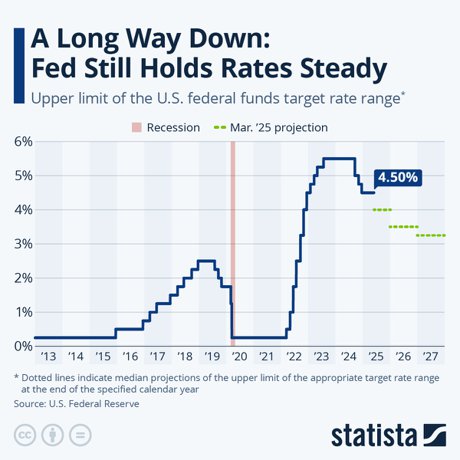
There would be a longer wait for mortgage lenders and potential consumers seeking relief from high interest rates. Following its two-day meeting, the Federal Reserve held rates constant at a range of 4.25% to 4.5% on Wednesday, in a move that was largely anticipated.
The Federal Open Market Committee (FOMC) initiated a pause in January, which is being maintained by this action. That followed a string of rate reductions in late 2024, including two 25-bps reductions in November and December and a 50 basis-point decrease in September.

Powell's comments

Many market watchers have recently pointed out that policymakers are in a challenging position to decide when a rate cut is acceptable. In a press conference on Wednesday, Fed Chair Jerome Powell mentioned that dilemma several times.

We have determined that the risks of both increased inflation and increased unemployment have increased, as we mentioned in our post-meeting statement. … We can't predict which way things will turn out, in my opinion.

"I believe there is a lot of uncertainty regarding, for instance, where tariff policies will settle out and what the effects will be on the economy, GDP, and employment when they do settle out. It's too early to tell, in my opinion. In the end, we believe that our policy rate is stable while we wait for more tariff clarification.

Powell pointed out that the unemployment rate is still very low at 4.2%, even though housing market watchers may be keeping an eye on the labor market for indications of stress. Additionally, he stated that figure is just one piece of information the Fed considers when making policy choices.

To determine whether or not things are indeed getting worse, we would examine the vast array of labor market statistics. Simultaneously, we would be examining the mandate's opposing viewpoint (in reference to inflation). We can find ourselves in a situation where we must strike a balance between those two factors, which is obviously a challenging decision to make.

The FOMC projected two rate cuts in 2025 in March. A reporter questioned Powell on whether the central bank should lower rates this year at all, given the growing apprehension among businesses and consumers as well as the negative risks to unemployment and inflation.

We'll have to watch how this develops. There are some situations when lowering rates this year may be reasonable. In some circumstances, it wouldn't. We simply don't know. … Powell remarked, "I couldn't say with confidence that I know what the appropriate path will be."

There are rumors that, as a result of the high tariffs imposed on China, fewer container ships and imported commodities are reaching important U.S. ports. For instance, Port of Los Angeles officials informed CNN that the volume of cargo is down almost 50% from the previous year, which means that shortages and higher prices will likely be on shop shelves in a few weeks.

Powell was questioned about the potential effects of the tariffs on small firms and if it would be sufficient to trigger a rate reduction.

"The data really doesn't show any significant economic effects yet. He remarked, "We see sentiment." There are worries about potential price increases or similar issues. People are now concerned about inflation. They fear that the tariffs will be a shock. However, that shock hasn't yet occurred.

Signals that contradict

Economists point out that Fed members have chosen to wait and see because of the economic uncertainties brought on by President Donald Trump's global trade policies and concerns about increasing inflation.

According to a statement from Sam Williamson, senior economist at First American, "the committee appears under little pressure to act, choosing instead to 'wait for greater clarity' on the impact of recently announced tariffs before easing monetary conditions," given that inflation is consistently above the FOMC's target and the labor market is showing resilience.

"But as it struggles with the inflationary risks of tariffs and a softening labor market that is causing fears of a recession, the Fed is finding itself facing an increasing challenge," he continued.

The Fed's decision demonstrates a strong labor market in spite of these worries. According to the U.S. Bureau of Labor and Statistics (BLS), non-farm payrolls created 177,000 new jobs in April, more than the 130,000 predicted by economists.

In light of federal government job losses and the impact of budget cuts on economic circulation, Logan Mohtashami, Lead Analyst at HousingWire, stated that the "latest jobs report represents a baseline that may not fully capture the effects of recent events, and as time progresses without a resolution, there is a potential for increased labor market pressures."

Meanwhile, March's year-over-year price increases were 2.4%, down from 2.8% in February and below forecasts, according to inflation statistics. This amount still exceeds the Fed's 2% inflation objective, though.

Fed policymakers are in a "tricky position" because the full effects of the Trump administration's tariffs have only just begun to manifest, leaving inflation rates unknown, according to Melissa Cohn, regional vice president at William Raveis Mortgage.

"May will be a very telling month," according to Cohn, since more information will clarify the administration's initiatives' wider effects. A possible rate cut in June or later may result from this.

"The Fed will not be in a position to lower rates until they are confident that the rate of inflation won't soar," Cohn continued.

Possibilities for borrowing?

The Fed's decision was mostly expected by market participants on Wednesday. Approximately 98% of interest rate traders projected that rates would not change, according to the CME Group's FedWatch program.

On Tuesday, the 30-year fixed-rate conforming loan averaged 6.89%, down 6 basis points from a week earlier, according to HousingWire's Mortgage Rates Center. During the week, the 15-year conforming fixed rate decreased 11 basis points to an average of 6.71%. However, mortgage rates were 20 to 30 basis points lower just a few weeks prior.

"The 10-year U.S. Treasury Note yields, which are a benchmark that mortgage rates loosely follow, have increased due to investor uncertainty about the impact of tariffs," Williamson added.

"Mortgage rates are expected to drop from their current levels, providing further relief to potential home buyers, as the Fed prepares to resume rate cuts in the second half of the year."

According to analysts at Keefe, Bruyette, and Woods, assuming that a 50-bps incentive is required for a customer to refinance, about 3% of mortgage holders are currently in the money to do so. These shares would rise to 15.7% and 26.6%, respectively, if rates dropped by 100 or 200 basis points.

The Fed's twin mandate, according to Geno Paluso, CEO of mortgage servicing technology company Sagent, entails striking a difficult balance between promoting the labor market with lower rates and containing inflation with higher rates.

"While the Fed tries to hold rates steady for trade war inflation signals, the White House will continue to put pressure on the Fed to cut rates in order to avoid a recession," Paluso stated.

Paluso clarified that although a recession would benefit stable homeowners by allowing them to refinance their loans at reduced rates, it would also result in challenges for homeowners who might lose their jobs or income. Similarly, he said, a tariff-driven increase in inflation may also hurt homeowners.


Consider buying a home while rates are stable. Check out the Hersey Group

April 25, 2025

Does Your Current Home Fit Your Retirement Plans?

Retirement is not only a turning point. Something quite unique is about to start. After years of diligence, it's at last time to calm down, investigate other interests, and live life on your own terms.


But this fascinating chapter also presents some major decisions. And one of the most important is whether your present house still fits the lifestyle (and budget) you intend for this next stage of life.

Right now, that is very crucial question. The Bureau of Labor Statistics (BLS) reports that the cost of living has surged by 23% alone in the past five years. That is predicated on the Consumer Price Index (CPI), which records changes in the average cost consumers pay for goods and services.

Rising expenses count when you consider how long your retirement funds should endure. And relax if you find yourself wondering whether your money will last as far as you need it to go. You could have more control than you believe.

Relocating is one way many retirees are safeguarding their savings. Because certain areas let your money go farther.

Particularly if you downsize simultaneously, moving to a place with a reduced cost of living will help you save on regular bills including taxes, utilities, and rent.

And that will free up funds for the things that make retirement some of the happiest years of your life: travel, hobbies, pampering your grandchildren, or any other activity you have been fantasizing about performing in this next phase.

Not to suggest you have to relocate. It simply means you should consider where you intend to live and ensure you have sufficient finances to support really living there. All of it is about preparation. As stated in Go Banking Rates:

"Your location is one of the few main determinants of the amount you should have saved for retirement. Where you decide to live out your golden years is quite important.

And you are not always obliged to travel great distances. It's out of state sometimes, but other times moving to the suburbs rather than staying close to the city might make a major impact. And considering this will help you design your future chapter.

A real estate agent can assist you whether your plans call for downsizing, relocating to be near your grandchildren, or visiting a place where you can stretch your funds. They will assist you to investigate the choices that fit your objectives and can simplify the selling of your present house. If you are thinking about a significant relocation, they may also link you with reliable agents located across the nation.

The Bottom Line

You have put much effort into creating a future you will be happy with. It could be time to investigate what's next if your present location or house no longer fits that.

Your perfect retirement scene is what? And might a relocation assist to make it even better? Talk about how to realize that idea with an agent.

Looking to size up or size down in Cincinnati? Talk to the Hersey Group for some retirement living options

April 23, 2025

Zillow to ban privately marketed homes, escalating an industry fight over secret listings

Zillow said on its website Thursday that a property will not be shown on the site if it is advertised directly to buyers without being on the MLS and made widely available in places where buyers look for homes.

After the National Association of Realtors announced a new rule meant to end an industry fight over a policy meant to cut down on "pocket" or "off-market" listings that aren't open to the public, Zillow made its choice. That rule lets sellers decide if they want to wait to start advertising their homes widely online. However, agents are still required to put homes on multiple listing services (MLS) within one day of starting public marketing.

When Zillow's new rules go into effect next month, they will focus on homes that didn't get much public exposure, like Instagram posts or being listed as "exclusive inventory" on a single brokerage's website but not on the MLS. “For the life of the listing,” the company said in a separate statement, those homes would not be allowed to be put on its website again.

The requirement for MLS listings, which is called the "Clear Cooperation Policy," has caused a lot of heated discussion in the real estate business for a long time. Supporters of fair housing and real estate websites like Zillow (Z) and Redfin (RDFN) have backed the policy, saying it makes things clearer and helps buyers get more money for their homes. But some agents and brokerage executives are against the strict listing rule, saying it limits the choices sellers have.

A lot of people who are selling their homes want to get them seen by as many people as possible. But some buyers, especially in high-end markets, look for off-market listings to keep their listings private or test their listing prices without everyone being able to see when they lower the price or how long the listing is up for sale.

Compass is a brokerage that advertises having access to off-market listings. Their CEO, Robert Reffkin, was against Clear Cooperation. They suggest that sellers use a "3 Phased Marketing Strategy" that first makes a property available only to Compass agents, then posts it on their website as "Coming Soon," and finally puts it on the MLS and other listing services.

Zillow's new rules say that a property can't be listed on the site if it is marketed to buyers for a long time without being listed in the multiple listing service (MLS).

Hersey Group always follows the NAR and MLS rules. Let them sell your home or help you purchase locally!

April 22, 2025

US House introduces bill to reduce mortgage insurance costs

Rep. Vern Buchanan (R-Fla.) presented H.R. 2760, also referred to as the Middle Class Mortgage Insurance Premium Act, into the House of Representatives last week. Three Republicans and seven Democrats are among the ten co-sponsors of the bill.

The House Ways and Means Committee was tasked with reviewing the bill. The legislation's stated goal is to "amend the Internal Revenue Code of 1986 to increase the income cap for and make permanent the mortgage insurance premium deduction," albeit the complete text is not yet accessible.

According to a statement from Buchanan, the vice chairman of the ways and means committee, "it is our duty to provide tax relief for middle-class families who want to own a home, given the skyrocketing housing prices in Florida and throughout the nation." "Millions of Americans will be able to realize the American Dream of home ownership thanks to my bipartisan legislation."

Co-sponsor Jimmy Panetta (D-Calif) stated, "The expenses of mortgage insurance can make purchasing a home that much more difficult for working families." "To help more middle-class homeowners, our plan would update the income threshold and permanently extend the tax deduction for mortgage insurance premiums.

"This kind of update to modernize this tax provision would help more Americans attain and maintain home ownership, even in the face of today's difficult housing market."

The MBA has been an outspoken supporter of any efforts to lower mortgage insurance rates, particularly for loans from the Federal Housing Administration (FHA).

In an attempt to address the country's housing supply and affordability issues, the Trump administration issued an executive order on the first day in office directing the heads of all executive departments and agencies "to deliver emergency price relief, consistent with applicable law, to the American people." After that, the MBA redoubled its efforts to lower mortgage insurance premiums.

We believe that the incoming administration's overall deregulation stance will be highly beneficial in lowering some of the origination process's expenses. On a recent episode of the HousingWire Daily podcast, Bob Broeksmit, president and CEO of the MBA, stated, "We anticipate an easing of the regulatory burden over the next months and years of this administration."

"But even more immediately, we think the administration could take a very serious look at the mortgage insurance premium for FHA loans, both on the single-family side and the multifamily side for affordable apartments and affordable rentals, and very quickly make good on this pledge, this commitment to lower housing costs," he continued.

The U.S. Mortgage Insurers (USMI) "strongly supports" H.R. 2760, according to Seth Appleton, the organization's president. In a statement, he described it as "common-sense legislation that would expand eligibility for the tax deduction for mortgage insurance (MI) premiums and restore, make permanent."

"The MI premium deduction was claimed 44.5 million times between 2007 and its expiration in tax year 2021, totaling $64.7 billion in deductions for diligent homeowners — an average of $1,454 per qualified taxpayer per year," Appleton stated.

Unfortunately, millions of taxpayers with low and moderate incomes have been unable to take advantage of this deduction in recent years due to its expiration. A step in the right direction toward restoring taxpayers' incomes and lowering the cost of homeownership for American families is the Middle Class Mortgage Insurance Premium Act.

The Hersey Group can recommend a suitable lender for your home purchase. Reach out today!