Fannie Mae says that 90% of purchasers don't know what credit score lenders want, or they think the minimum score is higher than it is.
Let that sink in. That means that a lot of people who want to buy a home assume they need higher credit than they really do. You might be one of them. And that can make you assume that buying a house is out of reach for you right now, even if that's not true. So, let's take a look at what the numbers truly indicate regarding buying a home and credit ratings.
There isn't one number that works for everyone.
When you buy a house, you don't need to have a certain credit score. That means there is more room for change than most people think. This is what you need to know. The numbers are different, and there isn't a single threshold that works for everyone. And that could let you in on doors you thought were closed to you. Talking to a lender you trust is the best approach to find out more. FICO says:
"Many lenders use credit scores like FICO Scores to help them decide whether or not to lend money, but each lender has its own plan, which includes how much risk it is willing to take." Not all lenders utilize the same "cutoff score," and there are numerous other things that lenders may look at . . .
Why Your Score Still Matters
When you buy a house, lenders look at your credit score to see how good you are with money. They want to know if you usually pay your bills on time, pay back loans, and other things.
Your score can affect the kinds of loans you can get, the conditions of those loans, and even the rate on your mortgage. And because mortgage rates have a huge effect on how much house you can buy, your score may feel even more crucial today. Bankrate says:
When you apply for a mortgage, one of the most essential things lenders look at is your credit score. Not just to get the loan, but also to get the best terms: Usually, the higher your score, the cheaper the interest rates and better terms you'll be able to get.
That doesn't imply your credit needs to be immaculate, though. You could still be able to secure a home loan even if your credit score isn't as high as you'd like.
Want to raise your score? Begin Here
If you talk to a lender and decide you want to raise your score (and hopefully your loan type and conditions too), the Federal Reserve Board says these are some sensible things to do:
This is a huge one: pay your bills on time. Lenders want to know that you can always pay your expenses on schedule. This includes everything, such credit cards, utility bills, and cell phone bills. If you always pay on time, it shows that you are a responsible borrower.
Pay off your debt: The less credit you use, the better. Try to maintain this number as low as you can. That makes you a lower-risk borrower in the eyes of lenders, which means they are more likely to provide you a loan with better terms.
Check Your Credit Report: Get copies of your credit report and fix any mistakes you notice. This can help you get a better score.
Don't Open New Accounts: It may be tempting to get more credit cards to raise your score, but it's best to wait. If you apply for too many new credit cards, your report may show hard inquiries, which might reduce your score for a short time.
The Bottom Line
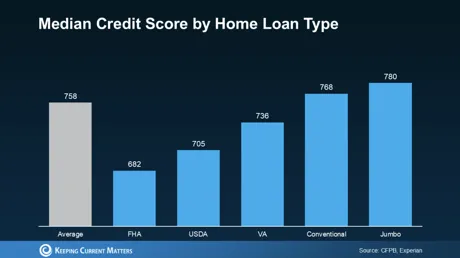
You don't need a flawless credit score to get a loan to buy a house. But having a higher score can help you receive better terms on your mortgage. If you want to know where you are and what your mortgage options are, the best thing to do is go to a lender you trust. Take a look at this graph that shows the average credit ratings of recent home buyers for different types of home loans: