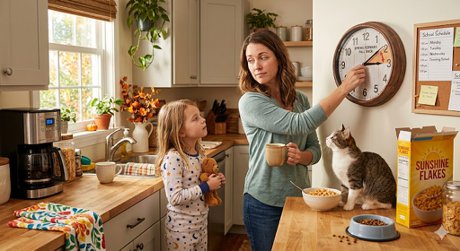
Let’s be honest: that "extra hour of sleep" in the fall is a myth, and the hour we lose in the spring feels like a personal affront. Whether you're dealing with a toddler who wakes up at 5:00 AM or your own caffeine-deprived brain, Daylight Saving Time (DST) can throw a wrench into the smoothest household gears.
Here is how to manage the transition without losing your mind—or your morning.
1. The "Slow Fade" Strategy
The biggest mistake we make is waiting until Saturday night to change the clocks. Your internal "body clock" doesn't have a reset button; it has a slider.
-
The Increment Method: Four days before the switch, shift your household’s bedtime and wake-up time by 15 minutes each day.
-
The Meal Shift: Don't just move sleep; move dinner too. Digestion plays a massive role in your circadian rhythm.
2. Light Management (The Biological Hack)
Your brain uses light to determine when to produce melatonin. You can "trick" your system into adapting faster by controlling your environment.
In the morning, open the curtains immediately to let in the sun; this suppresses melatonin and tells your body the day has begun. In the evening, dim the lamps about an hour before bed to signal that "night" has started. Finally, ensure you have blackout curtains in the bedrooms to prevent the early morning sun from waking the household prematurely.
3. Tackle the "Hidden" Clocks
We all remember the oven and the microwave, but a household "clock audit" prevents those mini-heart-attacks when you look at a wall and think you're an hour late for work.
-
The Car: Often the last clock to be changed. Do it Sunday morning so Monday’s commute is stress-free.
-
The Thermostat: If you have a programmed schedule, ensure it matches the new time so you aren't shivering in the shower.
-
The Smoke Detectors: This is the classic "safety check" reminder. Since you're already walking around the house, change the batteries now!
4. Be Patient with the "Human Elements"
If you have kids or pets, expect a "grace period" of about a week.
-
Kids: They don't care what the clock says; they care how they feel. If they are cranky, lean into a quieter-than-usual bedtime routine with extra reading time.
-
Pets: Your dog’s stomach doesn't adjust to DST. If they usually eat at 6:00 PM, they will be staring at their bowl by 5:00 PM. Try splitting the difference by 30 minutes for a few days.
Pro Tip: Avoid the "Sleep Debt" trap. It’s tempting to nap on Sunday afternoon to make up for the lost hour, but a long nap will make falling asleep Sunday night nearly impossible. If you must nap, keep it under 20 minutes!