As the U.S. housing market transitions past the peak summer buying season into the energetic autumn stretch, prospective homebuyer and seller sentiment is heavily anchored on borrowing costs. For the week ending September 7, 2026, mortgage markets continue to react dynamically to shifting macroeconomic signals, evolving Federal Reserve expectations, and steady inflationary stabilization.
Understanding these rate movements is crucial for anyone looking to enter the market, refinance, or evaluate long-term property investments.
-
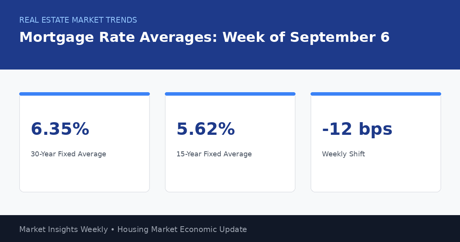
30-Year Fixed Average: 6.35%
-
15-Year Fixed Average: 5.62%
-
Weekly Shift: -12 bps
Current Mortgage Rate Averages: Week of September 6
According to primary mortgage market surveys, borrowing costs have experienced a modest downward drift entering early September. The benchmark 30-year fixed-rate mortgage is hovering around an average of 6.35%, down slightly from late August figures. Meanwhile, the popular 15-year fixed-rate mortgage stands near 5.62%.
This marginal easing is primarily driven by recent bond market adjustments, specifically the yield on the 10-year U.S. Treasury easing below recent thresholds as economic data points toward a soft landing. While rates remain elevated compared to the historic lows of the early 2020s, they represent a welcome psychological relief for buyers who faced rates peaking near or above 7% over the past couple of years.
Key Takeaway: A 50-basis-point drop in rates on a $400,000 mortgage can reduce monthly principal and interest payments by approximately $135, restoring buying power to many locked-out households.
Immediate Effects on Housing Demand and Inventory
The stabilization and slight decline in mortgage rates during early September are breathing new life into local real estate markets across the country. Here is how these trends are translating into tangible market behaviors:
-
Unlocking Locked-In Sellers: For months, the "lock-in effect" kept millions of homeowners with sub-4% mortgages on the sidelines. As rates edge closer to the mid-6% range, the friction of moving begins to ease for families needing lifestyle changes, job relocations, or downsizings.
-
Buyer Urgency Meets Hesitation: While lower rates improve affordability calculations, inventory levels remain relatively tight in high-demand suburban corridors. Buyers are quick to jump on well-priced, move-in-ready properties, leading to competitive multi-offer scenarios in prime school districts.
-
Adjustable-Rate Mortgages (ARMs) Retain Niche Appeal: With the yield curve flattening, hybrid ARMs continue to attract credit-savvy buyers seeking short-term relief, with initial rates resting comfortably in the upper 5% range.
Economic Outlook and What to Expect This Fall
Looking ahead through the remainder of September and into the fourth quarter, housing economists anticipate a resilient market. Much will depend on the upcoming Federal Reserve policy meeting later this month, where broad market consensus anticipates a potential interest rate cut. If the Fed initiates an easing cycle, secondary mortgage rates could experience further downward pressure.
However, potential buyers should remain vigilant. Home price appreciation, though moderating in certain metro areas, remains supported by persistent foundational demand. Strategic planning, securing pre-approvals early, and closely tracking bond yields will be vital advantages for navigating the autumn housing landscape.