March is the ultimate "bridge" month. One day you’re still clutching a space heater, and the next, you’re squinting at a stray dandelion in 60-degree sunshine. For homeowners, this is the critical window to transition from "survival mode" to "improvement mode."
If you want to avoid the "April Shower" emergencies and the "July Heatwave" repair bills, here is what should be on your radar this month.
1. The "Big Three" Exterior Inspections
Winter is tough on a house. Before the spring rains settle in, grab a pair of binoculars and do a lap around your property.
-
The Roof: Look for missing, cracked, or curling shingles. If you see "granules" (looks like coarse black sand) in your downspouts, your shingles are reaching the end of their life.
-
The Gutters: March winds and late-winter storms love to dump debris into your troughs. Clogged gutters lead to rotted fascia boards and foundation leaks. Clear them now so they're ready for the inevitable spring downpours.
-
The Siding & Paint: Check for "alligatoring" (cracked paint) or gaps in caulk around windows. Touching up a $15 tube of caulk now can save you from a $1,500 wood-rot repair later.
2. HVAC: Be the Early Bird
Most people wait until the first 80-degree day to turn on their A/C, only to realize it's blowing lukewarm air. By then, every HVAC technician in town has a two-week waiting list.
-
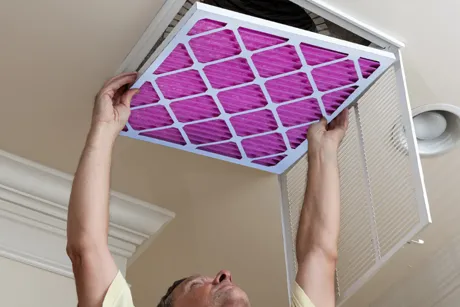
Change the Filter: This is the simplest way to save 5–15% on your energy bill.
-
Clear the Condenser: Check your outdoor unit. Remove any dead leaves, weeds, or "winter blankets" that might be obstructing airflow.
-
Schedule a Tune-up: Get a pro out now while their schedule is light.
3. Garden & Lawn: The Awakening
The soil is starting to warm up, but don’t start digging just yet—working wet soil can compact it and ruin its structure. Instead, focus on prep:
-
Pruning: While plants are still dormant, prune your fruit trees, berry bushes, and summer-blooming shrubs. (Wait to prune spring-blooming plants like Forsythia until after they flower).
-
The "Pre-Emergent" Window: If you struggle with crabgrass, March is usually the time to apply pre-emergent herbicide. A good rule of thumb: apply it when the Forsythia (those bright yellow bushes) start to bloom.
-
Seed Indoors: Start your peppers, tomatoes, and basil inside so they’re "teenagers" by the time the last frost passes.
4. Interior Safety Refresh
Since the clocks move forward in March (Daylight Saving Time), use it as a mental trigger for safety checks:
-
Detectors: Replace the batteries in your smoke and carbon monoxide detectors.
-
The Dryer Vent: This is a major fire hazard that most people ignore. Disconnect the hose and vacuum out the lint buildup—it also helps your dryer run much more efficiently.
-
The Sump Pump: With snow melting and rain coming, ensure your sump pump is actually working. Pour a bucket of water into the pit to make sure the float triggers the motor.
Pro-Tip: If you have a ceiling fan, switch the blade direction to counter-clockwise. This creates a downdraft that provides a "wind chill" effect, allowing you to keep the thermostat a few degrees higher without losing comfort.
March is less about "heavy lifting" and more about "strategic looking." A few hours spent poking around your foundation or testing your A/C now will buy you a lot of peace of mind when summer truly arrives.