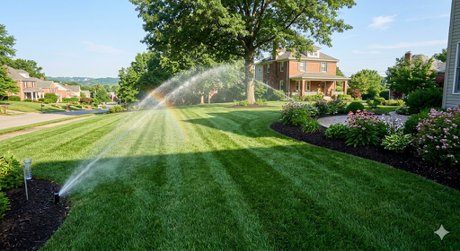
June in Cincinnati is a beautiful transition. The spring rains start giving way to hotter, drier summer days, and our landscapes notice the shift immediately. Because the Ohio River Valley features rolling hills and dense clay-loam soil, local lawns face a unique double-edged sword: the clay retains moisture well, but it easily gets compacted and is highly susceptible to heat stress and summer fungus.
To keep your yard the envy of the neighborhood, here is your essential June lawn care and landscaping roadmap.
1. Dial In Your Summer Mowing Height
The single easiest way to protect your lawn from the upcoming July and August heat waves is to change your mower settings right now.
Most Cincinnati lawns are filled with cool-season grasses like Kentucky Bluegrass, Tall Fescue, or Perennial Ryegrass. These grasses thrive in the spring but get stressed when soil temperatures rise.
-
Raise the blade: Adjust your mowing height to 3.5 to 4 inches.
-
Shade the roots: Taller grass blades act like a built-in sunshade for the soil. This drastically reduces water evaporation, keeps the root zone cool, and naturally crowds out aggressive summer weeds.
-
The 1/3 Rule: Never cut off more than one-third of the grass blade height during a single mow. Taking off too much at once shocks the plant and leaves it vulnerable to browning.
2. Transition to Deep, Infrequent Watering
As the frequent spring showers taper off, it’s time to take control of your irrigation schedule. Frequent, shallow watering encourages shallow root systems that wither the moment a hot spell hits.
-
The Target: Your lawn needs about 1 inch of water per week, including rainfall. Use a simple rain gauge to track what Mother Nature provides before turning on the tap.
-
Deep Soak: Instead of running your sprinklers for 10 minutes every day, water deeply 1 to 2 times a week for roughly 60 to 90 minutes per zone. This forces the roots to grow deep into the clay-loam soil to find moisture, building excellent drought resilience.
-
Beat the Sun: Always water early in the morning, ideally between 5:00 AM and 9:00 AM. This gives the grass blades plenty of time to dry throughout the day. Watering at night leaves the lawn damp for hours, creating a perfect breeding ground for local lawn fungi like Brown Patch or Dollar Spot.
3. Avoid Heavy Summer Fertilization
It's tempting to throw down a heavy dose of fertilizer to keep things bright green, but June is not the time for high-nitrogen quick-release products.
Forcing cool-season grass to rapidly grow new top growth during summer heat completely exhausts the plant's energy reserves and starves the root system. Even worse, excess nitrogen combined with Cincinnati's high humidity acts as an accelerant for summer lawn diseases.
What to do instead: If your lawn needs a boost, apply a strictly slow-release, low-nitrogen fertilizer or a organic top-dressing of compost. Focus instead on maintaining healthy potassium levels, which actively enhance the turf’s cellular tolerance to heat and drought stress.
4. Landscaping: Mulch, Inspect, and Prone
Your turf isn't the only thing requiring attention this month. June is a critical maintenance window for your ornamental beds and trees.
-
Mulch to Conserve Moisture: Ensure your flower beds and tree rings have a solid 2- to 3-inch layer of hardwood mulch. Mulch acts as an insulation blanket, moderating soil temperatures and keeping your plants' roots cool while locking in precious moisture. Just remember to keep mulch pulled a couple of inches away from the direct bases of tree trunks and shrubs to prevent rot.
-
Scout for Pests: Keep an eye out for early signs of common regional pests like spider mites and bagworms on needle evergreens. If you notice pale, specked foliage, shake a branch over a white piece of paper. If tiny specks start crawling around, you’ve got spider mites. Catching them early makes targeted treatments much more effective.
-
Prune Spring Bloomers: Now that spring-blooming shrubs like Forsythia, Lilacs, and Weigela have finished their show, June is the perfect time to prune them to shape. Pruning them now ensures you don't accidentally cut off next year's flower buds, which will begin forming later this summer.
By taking these proactive steps in June, you'll establish a deep, resilient root system and healthy soil structure that will keep your property vibrant, green, and beautiful all summer long.