In the past, those looking to buy a home focused on new building, generally on the outskirts of town, in new projects. But those days are over.
According to a new analysis by Cotality, the rising cost of owning a home means that old and modest homes are now the best starter homes.
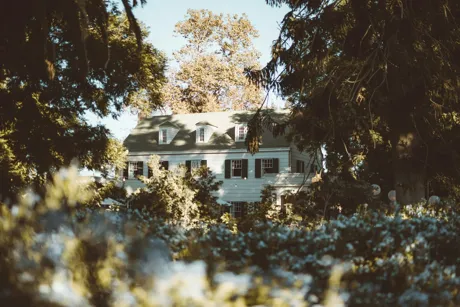
The "new" starter home is actually old.
"The starter home has effectively aged out," says Thom Malone, an economist at Cotality and the report's author. "High mortgage rates or a lack of supply make it hard for first-time buyers to buy."
New buildings aren't usually aimed at first-time buyers, unless that buyer has a lot of money.
He argues, "Land costs, building material prices, and a constant lack of housing supply have turned new builds into high-end housing, even in parts of the U.S. that are less expensive."
Also, new constructions usually need a cash deposit of up to 20% of the total cost. That might be a lot of money at today's pricing, more than a young person can afford.
The Cotality study indicates that sales of existing homes are down 2% from last year, while sales of new homes are down 3.43%. This is because there are so many more older properties than newer ones.
The survey says that over 70% of existing homes have less than the usual 2,000 square feet of area that is prevalent in new construction. This shows that many purchasers are choosing a lesser price over greater space. (A starter home, for the sake of this study, is one that is no more than 1,500 square feet.)
Even new homes that are smaller might still be expensive. For example, in April 2025, the typical price of a new home that was less than 1,500 square feet was $320,000.
Realtor.com® says that this is less than the national median price of $440,950 in June, yet it is more expensive than what was available before the COVID-19 outbreak. The median price in April 2019 was $310,000.
Real estate agents all agree that more people are looking for older properties. Affordability is important, but there are other reasons too.
"I've seen buyers choose older homes in more established areas over new construction because they don't want to live in a cookie-cutter neighborhood where all the homes look the same, there are no trees or mature landscaping, and they don't want to deal with all the problems that come with living next to new construction being built all around them," says Cara Ameer, a real estate agent with Coldwell Banker who is licensed in Florida and California.
She also says that older homes usually have bigger lots. "Builders put everything on lots that are 40 to 60 feet wide, and you pay more to have a view instead of backing up to other homes."
"People are definitely moving toward older homes as their first home," says Libby McKinney-Tristchler, an agent with Team AFA/William Raveis in Southport, CT. "For a lot of families with two incomes, the idea of a smaller, easier-to-manage space is also a lifestyle choice. They don't want to spend their weekends taking care of enormous houses or properties.
Clients are searching for something cheaper, of course, as Southport is a costly location with a median house price of $869,000.
"Buyers are telling me they want something that they can afford, and older homes give them that chance," she says.
Andrea Kremer of Rooftop Realty Group showed a little (1,080-square-foot), one-owner house on Edden Lane in Syracuse, NY that was 70 years old. It took barely a week for someone to buy it.
"It's just a matter of supply and demand," she explains. "We have a lot of buyers, but not a lot of stock." If the house is in a good area, priced right, and is something that someone can make their own or is move-in ready to some level, they are selling like hotcakes if they are around $300,000.
The small red four-bedroom fixer-upper had a bidding war and sold for about $50,000 more than the $129,900 asking price.
Kremer recalls, "It was probably the only house in this area for that price."
Bruce Ailion, a Re/Max agent, adds that the shift toward older and smaller homes is also happening in Atlanta.
"Ten years ago, it would have been hard to sell these homes," he says to Realtor.com. But now, homes built in the 1950s that are only 750 to 1,100 square feet are selling quickly, either to people in their 20s and 30s or to their boomer or Gen X parents.
He explains, "One of the few ways to get an affordable detached home is to go smaller and older."
And then there are taxes on property.
"Most counties use the purchase price of a home to figure out how much tax it will have. Jeff Lichtenstein, CEO of Echo Fine Properties in Jupiter, FL, states, "A fixer-upper will have a lower tax base."
More square feet is not always better.
Jonathan Klemm, the CEO of Quality Builders, a general contracting company, says he spotted an opportunity when he bought a small three-bedroom house constructed in 1963 for $311,000 ($173 per square foot) in Lyons, a suburb of Chicago. The average price in the area is $193 per square foot.
Because of his history, Klemm thought he could do the work, save money, and put his own imprint on the house. He thought 1,800 square feet was the smallest space he could live in with his two young girls. It was all they required.
He tells Realtor.com, "A lot of people are more willing to do the work and do small cosmetic changes or live with some of the older styles and upgrade over time." "I wanted something that I knew we could fix up. From the start, I really wanted an older property that needed some cosmetic work.
Many people who buy smaller, older homes think they will survive longer than newer homes.
Jameson Tyler Drew, a real estate investor in Los Angeles, says Realtor.com, "I'll be the first to say it since no one in my industry wants to say it: New homes are crap." He also sells things in Indiana, where he lives.
He notes that a "solid chunk" of his sales come from new homes, but those homes tend to have a lot of problems.
He continues, "These homes—and I'm not blaming any one home builder, because this is a problem across the board—almost immediately have problems after they're built."
"Missing joists, cracked window welds, HVAC installed wrong, and so on." To make things worse, the bigger home builders will battle you tooth and nail before they fix anything substantial that they are in charge of.
"I've seen new homes with foundations that aren't level for some reason. I've seen every kind of mistake that happens when home builders don't work together and use the lowest materials they can find.
He likes old houses made with strong materials that are hard to locate in new construction.
He says, "Floors and joists are often made of American chestnut, which is almost extinct these days." "They constructed floors that were really strong and gorgeous. Even if you don't choose the Victorian palace, the cookie-cutter houses built between 1930 and 1960 still have thicker walls and better materials than dwellings created today. All for a small amount of money.
What did he say? Get old.
He says, "Every day of the week, I will always tell my client to buy an older home instead of a new one."