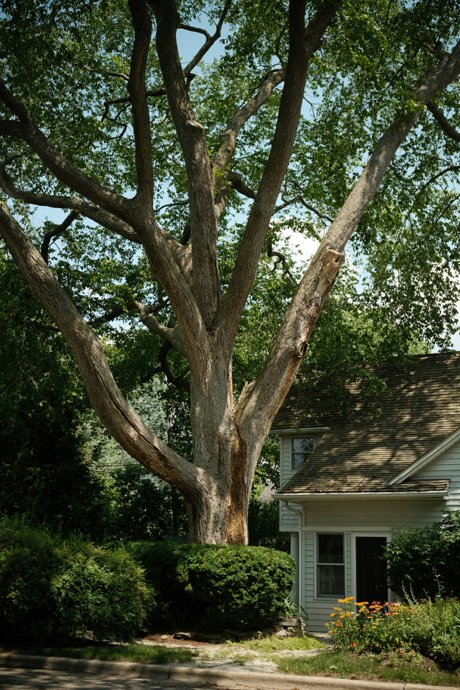
It's tempting to spend all your time and money on the lovely things when you're landscaping around your house. Adding lush foliage, bright flowers, and big trees is the fastest way to turn a dull yard into an outdoor paradise. Plus, plants can make your property look better from the street and raise its value.
The only problem is? Some of the things you chose could be putting your home in danger. We enjoy how plants can add variety and beauty to a landscape, but what you select to grow around your home can have a huge effect on its structure and safety. The pear tree that looks ideal or the neat ground cover may seem harmless, but plants with sneaky roots, fast growth, or weak construction can all bring difficulties later on.
Being careful about where you put plants and what kind of plants you choose may save you a lot of worry and money in the long run. It can also help you prevent severe problems like blocked gutters, damaged foundations, or ruined roofs. In the following sections, we'll go into more detail about the trees and plants you should think twice about putting near your home.
Things to Think About When Planting Your Yard
Experts say that when you choose what to plant around your property, it's not always a matter of choosing between a "bad" plant and a "good" plant. You need to look at your choices as a whole to see if they are good for both your house and your landscape.
Cynthia Domenghini, PhD, a specialist in consumer horticulture at Kansas State University, says, "Any plant can be a problem if it is planted in a place that doesn't meet its needs." "This includes a place that is too small for the plant to grow to its full size. Before you pick a plant, it's crucial to complete your homework. "Know the conditions of the site and pick a plant that will thrive there."
Before you plant anything in the earth, think about these things:
Distance
When planting around your house, one of the most crucial things to think about is how far away the plant is from the outside of your house. Susan Calhoun, a landscape designer at Plantswoman Design, says, "As a general rule, we always plant outside the drip line of the house for any plant." "This helps plants stay alive with any rainwater that is available and any water that the owner gives them. We would plant two feet away from the house if there is no roof overhang. If you plant too close to the side of your house, you could damage the foundation or have to cut back a lot on a tree or shrub to make it small enough to fit in the space you want it to.
Size when grown
When landscaping, one problem that many home gardeners have is Think about how big the plant is now and how big it will get in the future. Darya Barar, a senior consulting urban forester and arborist with Bartlett Tree Experts, says, "Make sure you know the mature size of any plant, but especially trees and shrubs. Then, make sure the plant fits the space you have to grow it." "Large trees planted in small spaces, near a house, or in areas where planting is limited will eventually outgrow the area and probably cause problems in nearby areas." As a rule of thumb, don't plant a medium or large tree closer than 20 feet to a house. Shrubs should be at least 3 or 4 feet away from a building.
Habit of Growth
You shouldn't just think about how big a plant becomes; you should also think about how it grows in general. It's recommended to avoid plants with roots that tend to break things or that will vine and climb anything within 10 feet. Barar states, "If tree branches grow and hang over a house, litter from falling leaves, fruit, and other plant parts will build up on roofs and in gutters." "Vines like English and Boston ivy can also attach themselves to the sides of a building, which can hurt the surface."
Can catch fire
You might assume you don't have to worry about how flammable a plant is if you don't live in a region where wildfires are common, but you'd be mistaken. More and more, professionals are warning homeowners to think about how the plants they choose can affect how well their homes are protected against flames. JP McDonnell, a trained consultant arborist with SavATree consultant Group, says, "We're seeing more and worse wildfires in recent years as the wildland-urban interface (WUI) grows, temperatures rise, and droughts last longer and happen more often." "That has led to more interest in managing defensible space." There are numerous management zones around a home that suggest ways to lower the danger of wildfire damage to your property. You may always look up individual rules on Firewise USA or in your area.
8 Plants You Shouldn't Grow Close to Your House
You should constantly think about what you plant in your yard and where you place it. Here are the plants that experts say you should avoid the most.
Ivy in English
It's hard to keep creeping vines, like English ivy, under control. They typically climb up surrounding buildings and make them less stable. Domenghini explains, "If you plant [English ivy] near trees, it will probably climb up them." "The ivy plants are heavy, which might break tree branches and make things dangerous. It's crucial to know that this type of plant grows quickly, so you need to pick a good spot for it to grow and spread without producing problems.
Tree of Heaven
A good rule of thumb is Plants that are known to be invasive should be avoided at all costs. They are often on the list of plants that should not be grown. Barar says, "If I were to tell homeowners not to plant a certain type of tree or plant, it would be any species that is known to be invasive." "These species can outcompete native plants, mess up ecosystems, and make landscapes worse." Tree-of-heaven and purpleleaf plum are two examples of plants that have caused problems for the environment all around the country. I always tell people to ask local specialists or extension organizations to find out which species are invasive in their area.
Bradford Pear
Bradford pear trees used to be the most popular trees in planned communities and suburban centers, but now they are quite unpopular since they are structurally unstable and have smelly blossoms. McDonnell explains, "This tree is not native and spreads quickly." "It can outcompete the plants that are already there, and it usually grows with weak branches, which makes it more likely to perish in storms. Several states have even made it illegal to have the tree and are trying to get rid of it.
The Cherry Blossom Tree
Cherry trees are beautiful, but they don't fit in with every environment, especially if you don't have a lot of lawn for them to spread out on. Calhoun states, "The roots of a pink cherry tree will look for water, which can block drainage systems, septic systems, and even irrigation systems."
Japanese Forest Grass
If a plant or tree isn't causing problems above ground, it doesn't indicate everything is fine below ground. Calhoun notes that "grasses with running root systems can be a bit of a problem." Japanese forest grass, ribbon grass, and Japanese blood grass all have roots that run down the ground. These roots can spread and take over driveways, patios, and paths. They will also look for water sources and block systems, such the downspout curtain drains, surrounding your foundation.
Trees with Silver Maple
Because of their big stature and brilliant fall leaves, maple trees are quite popular in landscaping. That being said, they aren't the best choice for near a house, especially if you reside in an area that gets a lot of storms. McDonnell says, "Silver maple trees are known for having weak wood that rots easily and fails in storms." Dr. Domenghini says, "The roots of these trees can also break up sidewalks and driveways and damage sewer lines."
Creeper Trumpet
Be careful if the plant you want to buy has the words "creeper" or "crawler" in its name. You can use a lot of these plants as ground cover, but you should keep an eye on them as they grow. McDonnell says, "Trumpet creeper is a vine that people often plant for its pretty flowers, but in some areas, the USDA calls it an invasive weed." "It can easily spread through aerial rootlets and climb structures on residential properties, getting into siding, gutters, and downspouts and possibly damaging or weakening mortar joints."
Trees with Cones
It seems great to cut down a Christmas tree from your own yard, but then you remember how messy conifer trees can be. Calhoun states, "Most full-sized evergreen conifers shouldn't be planted close to the house." "These are better for forests and looking at things from a distance." They can be dangerous because they burn quickly and their roots might reach the foundation and cause difficulties there. If you don't clean out the gutters frequently, needles from the trees could become stuck in them and cause the siding and facias to decay.
Contact Hersey Group for landscaper recommendations.