In the opening weeks of 2026, the housing market is buzzing with a radical proposal from the Trump administration: the 50-year mortgage. Aimed at breaking the "affordability logjam," this plan would extend the traditional 30-year term by two decades.
While the Federal Housing Finance Agency (FHFA) calls it a "game changer," economists and homeowners are sharply divided. Is stretching debt across half a century a lifeline for the middle class, or just a win for the banks? Here is a breakdown of the pros and cons.
The Pros: Short-Term Breathing Room
The primary appeal of a 50-year loan is immediate cash-flow relief. By spreading the principal over 600 months instead of 360, the monthly payment drops.
-
Lower Monthly Payments: For a $400,000 loan, a 50-year term could shave roughly $250–$300 off the monthly bill compared to a 30-year term at the same rate.
-
Easier Qualification: Lower payments help more buyers meet "debt-to-income" requirements, potentially opening the door for first-time buyers who are currently priced out.
-
Market Entry: In high-cost cities, this might be the only way for young families to stop renting and start owning—even if that "ownership" is mostly on paper for the first few decades.
The Cons: The High Price of Patience
The trade-offs for that lower monthly payment are significant and, for some, disqualifying.
-
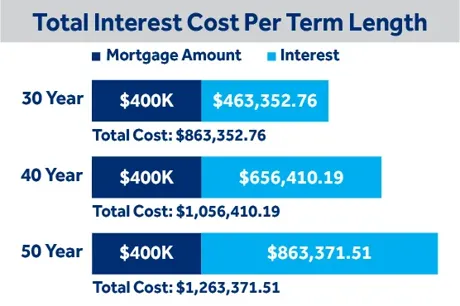
Explosive Interest Costs: Because you are borrowing money for 20 additional years, the total interest paid can be staggering. On a $400,000 home, you might pay nearly $400,000 more in interest over the life of the loan compared to a 30-year mortgage.
-
Glacial Equity Growth: You build equity at a snail's pace. It could take nearly 40 years just to pay off half the principal. This makes it much harder to sell or refinance if home prices dip.
-
Retirement Risk: If a 35-year-old takes out a 50-year mortgage, they won’t own their home outright until they are 85. Carrying a mortgage into retirement can severely strain fixed incomes.
-
Market Inflation: Critics argue that if everyone can suddenly "afford" a more expensive home via 50-year terms, buyers will simply bid prices higher, wiping out any initial savings.
The Verdict
The 50-year mortgage is a tool, not a cure. For a buyer who plans to sell in five years or expects a major income jump, it might serve as a temporary bridge. However, for most, the "savings" are a drop in the bucket compared to the mountain of interest waiting at the end.
As this policy moves through regulatory hurdles in 2026, the old adage remains: there is no such thing as a free lunch in real estate—only a longer time to pay the bill.
Contact Andrew Hersey for recommendations on a great lender.